Scroll through any van life feed and you’ll see it. Someone strips out a tired old van, spends a few months of weekends on timber, wiring and a clever pull-out kitchen, and drives off into the sunset.
It’s a great story. What the reels rarely show is the bit that comes after: registering the thing, insuring it, and one day trying to sell it. That’s where a lot of DIY builds come unstuck in Australia. It’s not because they’re badly made. It’s because nobody planned for compliance.
If you’re weighing up a DIY build against buying a professionally converted van, this is the part worth thinking about first.
Is a DIY campervan conversion legal in Australia?
Yes, a DIY conversion can be completely legal. The catch is that legal doesn’t mean “anything goes”. Once you change a registered vehicle in a significant way, the change usually needs to be certified before the van can be registered in its new form.
The rulebook most certifiers work from is VSB14, the National Code of Practice for Light Vehicle Construction and Modification. It covers vehicles up to 4.5 tonnes GVM, which takes in the vans most people convert, and it has a section written specifically for campervan and motorhome conversions.
Brand-new vans converted by an approved builder before they’re sold follow a different federal pathway, called second-stage manufacturing. That’s a bigger topic in itself, and this guide to campervan compliance in Australia explains how the two routes compare. For a DIY build on a van you already own, though, you’re almost always in VSB14 territory.
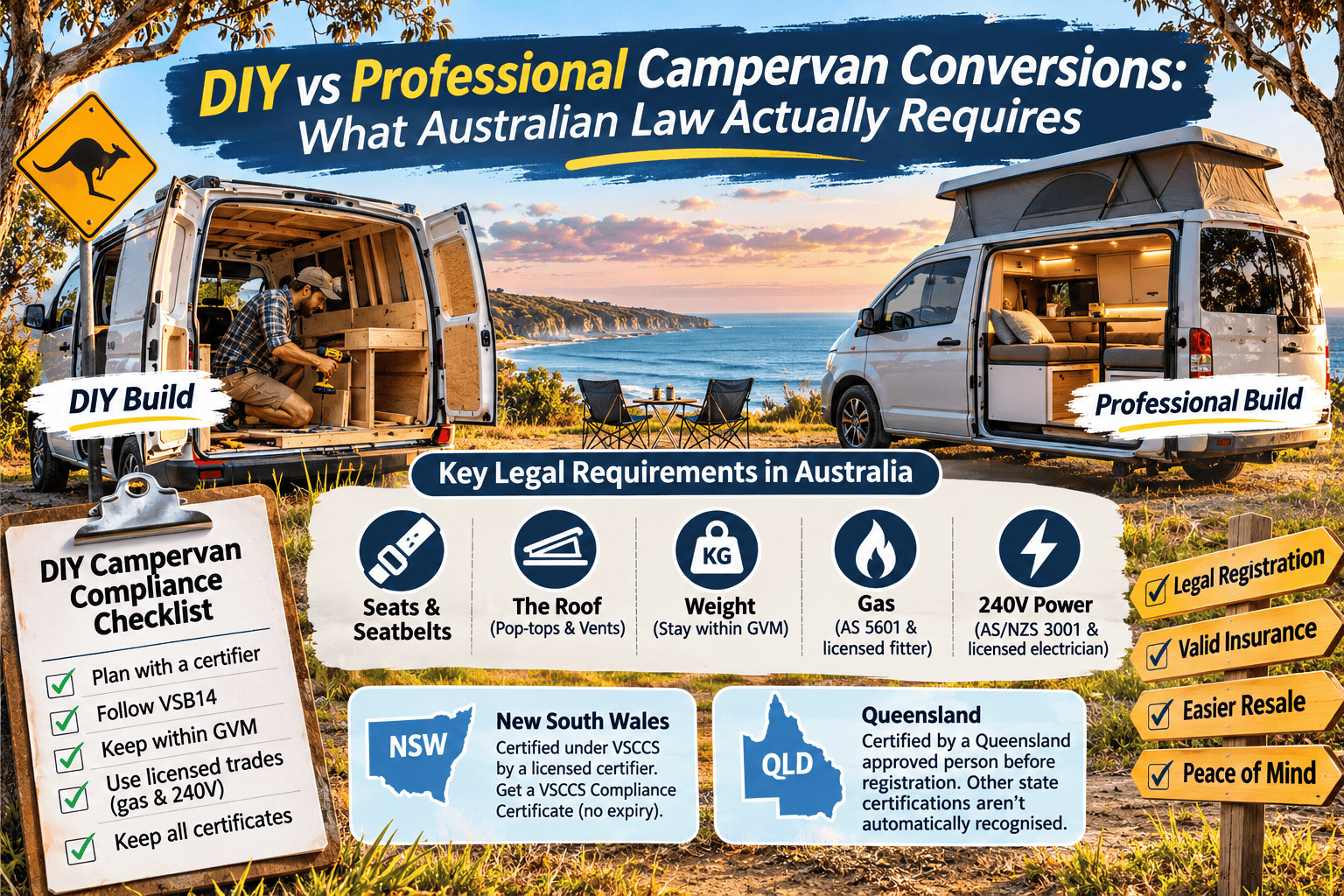
Five things a DIY build has to get right
Most DIY compliance problems trace back to the same handful of areas. Get these sorted early and the rest of the build is far less stressful.
Seats people travel in. If anyone will ride in a seat you’ve fitted, it needs compliant seatbelts and anchorages. This is the one certifiers look at hardest, and it’s the hardest to fix once the floor and cabinetry are in.
The roof. Pop-tops and roof vents look simple on YouTube. In reality, cutting a big hole in the roof changes the body’s structure, and a certifier will want to know how it was done and reinforced.
Weight. It’s the sneaky one. Plywood, a second battery, a full water tank, a fridge, two people and their gear add up quickly. Every van has a gross vehicle mass (GVM), and a van that’s over it is non-compliant, full stop. To put a number on it, a Toyota HiAce campervan built on the latest H300 has a GVM of 3,300kg, so every kilo of fit-out eats into what’s left for people, water and gear. Weigh yours at a public weighbridge before you assume you’re fine.
Gas. Fixed gas appliances have their own Australian Standard (AS 5601) and generally need a licensed gasfitter and a compliance certificate. Plenty of DIY builders go induction or portable butane for exactly this reason.
240V power. Mains-style wiring in a vehicle falls under AS/NZS 3001 and generally needs a licensed electrician. A simple 12V system with a plug-in portable inverter is often much easier to get through, so check with your certifier which way your setup falls.
How DIY certification works in NSW and QLD
Registration is a state job, so the process depends on where you live. Here’s how the two east coast heavyweights handle it.
New South Wales
In NSW, significant modifications are certified under the Vehicle Safety Compliance Certification Scheme (VSCCS) by a licensed certifier. Transport for NSW’s advice is to speak to a certifier before you start, and they may ask to inspect the work at different stages. If it passes, you get a VSCCS Compliance Certificate, which doesn’t expire.
One line on that page is worth sticking on the fridge: your insurance could be void if modifications aren’t assessed and certified.
Queensland
Queensland uses approved persons. Under Queensland TMR’s vehicle modification rules, modifications for recreational purposes need certifying by a Queensland approved person before registration. TMR also makes the point that modifications certified in another state aren’t automatically recognised in Queensland.
That last part catches people out. Build in one state and register in another, and you may end up paying for certification twice.
The bit nobody tells you
In both states, the best time to involve a certifier is before you buy your first sheet of ply. A ten-minute chat about your layout can save you pulling a finished bed out because the seatbelt anchorages don’t pass.
When a professional build makes more sense
DIY isn’t the wrong choice. For some people the build is half the fun, and a well-planned, properly certified home conversion is something to be proud of.
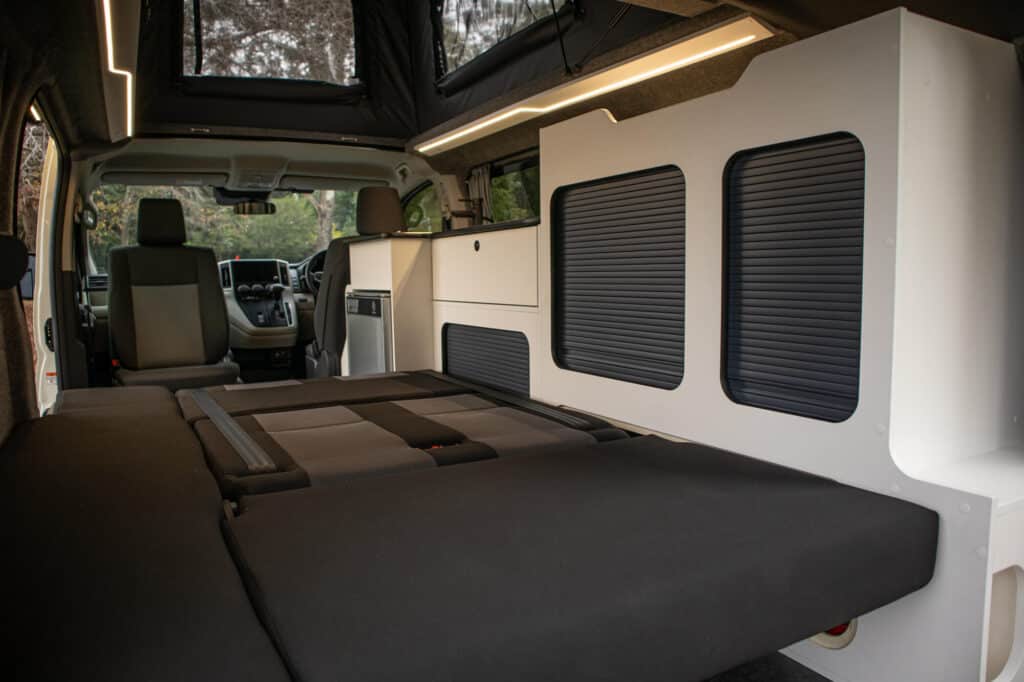
It starts to make less sense in a few situations. One is time: if a build would take you a year of weekends, that’s a year you’re not travelling. Another is when you want seats for travel, a pop-top and 240V, because that’s where certification gets complex and trades get expensive. The last is resale. A buyer can see exactly how a professionally certified van was built. A home build with patchy paperwork usually sells for less, if it sells at all.
If you go the professional route, ask questions rather than taking a glossy finish on trust. Is the builder approved to convert new vehicles? Is the finished van on the Register of Approved Vehicles? Do they hold a motor dealer licence? A good builder will answer all three without blinking. Browsing a few examples of campervan conversions in Australia is a handy way to see what a fully documented build looks like before you talk to anyone.
The bottom line
A DIY campervan conversion can be legal in Australia, but only if compliance is part of the plan from day one. Talk to a certifier first. Watch your weight. Leave gas and 240V to licensed trades. And keep every certificate somewhere safe, because you’ll need them to register, insure and eventually sell the van.
If that sounds like more admin than adventure, there’s no shame in buying a van someone else has already certified. Either way, you’ll be on the road with one less thing to worry about.