Every owner of a small businesses in australia has heard the same advice for a decade: go digital, run ads, post more, and boost the post. Plenty have followed it and found themselves paying more every year to reach fewer people. Click prices keep climbing, organic reach keeps shrinking, and the inbox of the average Australian is a war zone nobody wins.
Meanwhile, some of the busiest local businesses in the country barely touch any of it. The mechanic booked out three weeks ahead, the cleaner with a waiting list, and the cafe that owns its corner. Look closely at how they got there, and you keep finding the same unfashionable answer: they are visible in the physical world, in the suburb where their customers actually live.
The letterbox is quieter than the inbox.
Twenty years ago the letterbox was full and the inbox was empty. Now it is the other way around. A marketing email lands in an inbox most people clear with the delete key, while a piece of paper in a letterbox still gets handled, looked at, and decided on by a human being. Even when the decision takes two seconds, that is two seconds of full attention, which is more than most digital ads ever get.
Attention is only half the story. Locality is the other half. A flyer drop covers exactly the streets a local business serves. There is no algorithm deciding who deserves to see the offer, no bidding against a national franchise with a bigger budget, and no wondering whether the clicks came from the other side of the country. A lawn care business in Penrith does not need to reach Perth.
Paper sticks around
A digital ad exists for the moment it is on screen. Paper hangs about. The takeaway menu goes in the drawer, the tradie’s card goes on the fridge, and the school fete poster stays on the noticeboard for a month. It fits naturally into the Aussie lifestyle, where local businesses, neighbourhoods, and community events still play a big role in how people discover and remember services. Marketers call this dwell time, and paper wins it by default.
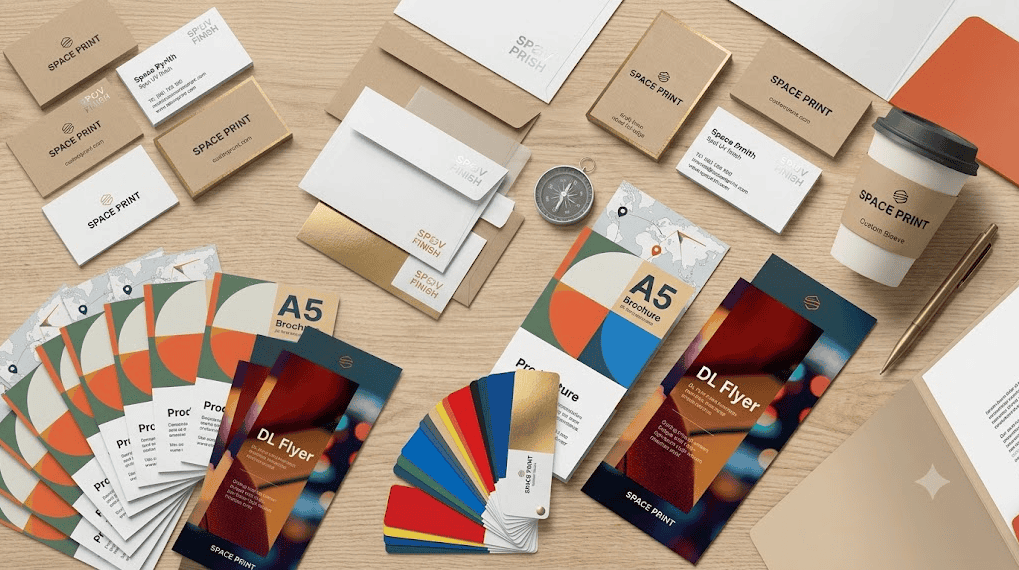
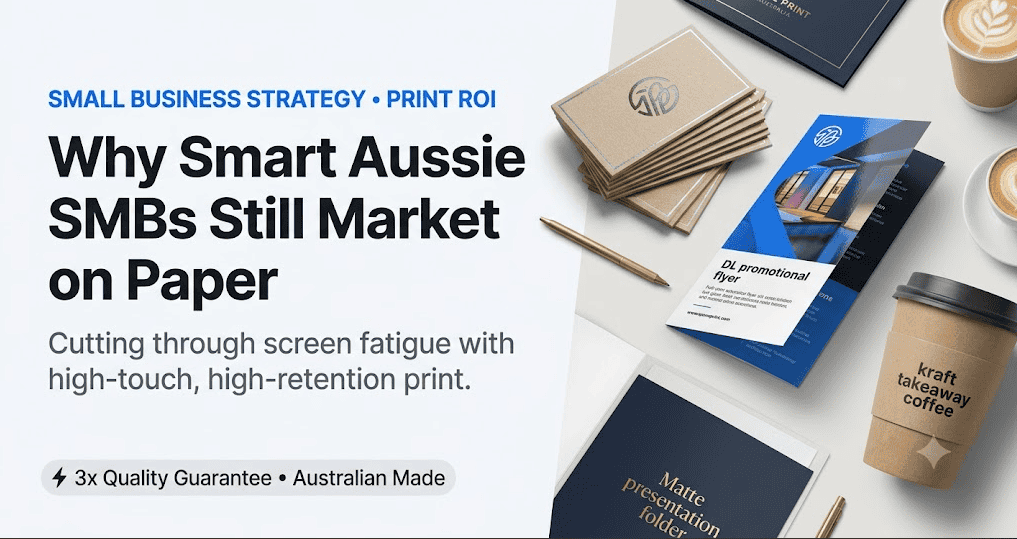
That is also why the businesses that do this well think about quality. A flimsy photocopied sheet says something about the business that printed it, and so does a clean, well-designed flyer on decent stock. When the piece is going to sit on someone’s fridge for six months, the difference between cheap and decent printing is a rounding error against what it says about you. Getting custom flyer printing done properly costs a fraction of a month of paid clicks and keeps working long after the campaign budget would have run out.
Where paper beats pixels for a small operator
Certain jobs are simply built for print, and most of them are exactly the jobs a small Australian business needs done.
Announcing yourself to a new area. A flyer dropped across the suburb tells every household you exist. A new cafe, a new physio, and a mobile dog groomer expanding a suburb over: one afternoon of letterboxing puts the name in a thousand homes.
Being remembered at the moment of need. Nobody searches for a plumber until the pipe bursts. The card on the fridge and the magnet on the meter box win that moment against every competitor who exists only in a search result.
Local events and seasonal pushes. School fete, market stalls, Christmas trading hours, and EOFY offers. Paper suits anything with a date and a suburb on it.
Backing up word of mouth. When a happy customer wants to recommend you, something physical to hand over turns a warm mention into an actual inquiry.
The math a small business should actually do
Print gets dismissed on response rate, and that misses how the numbers really work. Suppose a thousand flyers cost less than a single week of modest paid advertising. If they produce a handful of jobs for a trade business, the campaign has paid for itself several times over, and the flyers that did not convert immediately are still sitting in drawers doing quiet work for months.
The other number that matters is lifetime value. The customer who won by a flyer is usually a neighbor. Neighbors come back, and they tell the street. A click from nowhere rarely does either.
What good print actually looks like
Most flyers fail before they reach a letterbox, and they fail at the design stage in predictable ways. The businesses that get real jobs from paper follow a handful of rules that cost nothing extra to apply.
One message per piece. A flyer is not a website, and the moment it tries to list every service the business offers, it says nothing memorable about any of them. The lawn business leads with the spring tidy-up offer, not with a directory of fourteen services.
A reason to act now. A date, an offer that expires, and a booking window for the season. Paper without a deadline gets filed under later, and later never comes.
The suburb’s name on the paper. “Servicing Penrith and surrounds” outperforms generic copy because the reader instantly knows this is for them. Local names signal local accountability.
A phone number a human answers. It sounds obvious, and it is the most common failure point. The flyer works, the call comes, and it rings out to a full voicemail box. Print campaigns should launch in the weeks the business can actually answer.
The timing trick most businesses miss
Print rewards the calendar in a way digital rarely does. Households make predictable decisions at predictable times of year: gardens before summer, gutters before storm season, tutoring before exams, catering before Christmas, and accountants before June 30. A flyer that lands three weeks before the decision window opens gets kept. The same flyer in the wrong month goes straight in the bin.
The smartest small operators build a simple yearly grid: which suburbs, which weeks, which offer. Two or three well-timed drops a year, repeated so the name becomes familiar, beat one big anonymous blast every time. Familiarity is the actual product of letterbox marketing. The job comes later, when the need arrives and the name is already known.
Print and digital are a team, not rivals.
None of this is an argument for abandoning the internet. The businesses getting this right use paper to start the relationship and digital to continue it. The flyer carries a QR code to the booking page. The poster mentions the Instagram handle. The letterbox drop lands the same week the business turns on a small local ads campaign, so the name rings a bell when it appears on screen.
That combination is precisely what the big franchises do at a national scale. A small operator can run the same play across four suburbs for the price of a coffee machine, and unlike the franchise, the local owner’s name and face can be on the paper, which in a suburb is worth more than any brand guideline.
The quiet truth of local marketing in 2026 is that the physical channel everyone abandoned is now the least crowded one. For a small Australian business trying to be known in its own postcode, that is not nostalgia. That is an opening.