
Being the 6th largest country by area and home to one of the more stable, well-regulated economies in the world, Australia continues to offer an excellent landscape for small business, marked by strong financial and corporate regulation. Most budding entrepreneurs are inspired to execute their own niche and leave a mark in the corporate world. In the ever-evolving technological world, many entrepreneurs have surged to unprecedented heights, building profitable businesses in Australia.
As an Australian, if you are also seeking smart small business ideas to put into action, then you have come to the perfect spot. Roughly 97% of all firms in Australia fall under the small business category (ABS, 2025), and these businesses are accelerating the Australian economy. As owners of small businesses, you’re actually a part of Australia’s thriving sector.
Here are some important insights:
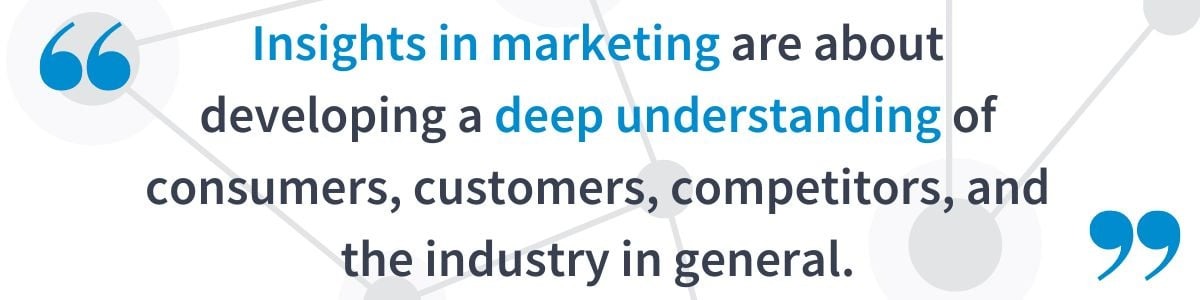
Image Credit: https://www.demandjump.com/blog/what-is-an-insight-in-marketing
As per data from the Australian Small Business and Family Enterprise Ombudsman (ASBFEO), small businesses constitute the backbone of the Australian economy, employing more than 5 million people and contributing around a third of the country’s GDP (ASBFEO/ABS, 2025), giving space to creative entrepreneurship. These figures show that small businesses in Australia continue to play an improving role in the country’s economic expansion and prosperity.
The primary sources of revenue in Australia are driven by exports in the mining sector, banking, manufacturing, and telecommunications. The service sector contributes to 70% of GDP in the country, and this includes industries like education, tourism, and financial services. The population of Australia is around 26 million, which creates a perfect atmosphere for Australian small businesses to flourish.
The Australian economy is well managed, and it has a strong population. Australia has a skilled workforce and a supportive government that has come up with policies that help citizens execute business freely. Investors are also benefiting here to expand business ventures, and hence it is always a win-win situation for investors and small businesses simultaneously.
Now, let’s look at 10 profitable business ideas for small business owners that are tailored for the market in 2026, and if you are planning to start your own small business, then this guide will help you do so.
Quick Reference: Startup Costs & Profit Margins
Before you dive into the detail below, here’s the whole list side by side — handy if you’re comparing a few options at once.
| Business Idea | Estimated Startup Cost (AUD) | Typical Profit Margin |
| Laundromat | $100,000 – $400,000 | ~20–25% net (IBISWorld, 2026) |
| Commercial Cleaning | $5,000 – $50,000 (franchise) | 10–28% (IBISWorld, 2025) |
| Café / Restaurant / Takeaway | $150,000 – $400,000* | 5–15% (IBISWorld, 2025–26) |
| AI Consulting & Automation | $1,000 – $10,000* | 30–50%* |
| NDIS Support / Plan Management | $5,000 – $20,000+ (incl. audit) | 20–60% by service (VCCG, 2025) |
| Online Tutoring & Teaching | $500 – $5,000 | 40–60%* |
| Personal / Online Fitness Training | $2,000 – $15,000 | 20–40%* |
| E-commerce / Online Retail | $2,000 – $20,000 | 10–30%* |
| UGC / Content Creation for Brands | $200 – $2,000 | 60–80%* |
| Website / Web Design Services | $1,000 – $10,000 | 15–25% (industry benchmark, 2026) |
*Estimate based on general industry benchmarks; figure could not be tied to a single authoritative AU source and should be independently verified before using in financial planning. Startup costs and margins vary by location, scale and business model — treat these as planning ranges, not guarantees.
Top 10 Small Business Ideas in Australia
1. Laundromats
The laundromat business idea may sound a little distinct, but it remains one of the most profitable small business ideas in Australia. This business is about dry cleaning and laundry, which offers great returns.
The laundry and dry-cleaning services industry now contributes $2.5 billion to the Australian economy each year, and an average Australian laundromat generates a return of approximately 20–25% of the initial investment annually, with earnings ranging from $300 to $1,300 per day (IBISWorld, 2026).
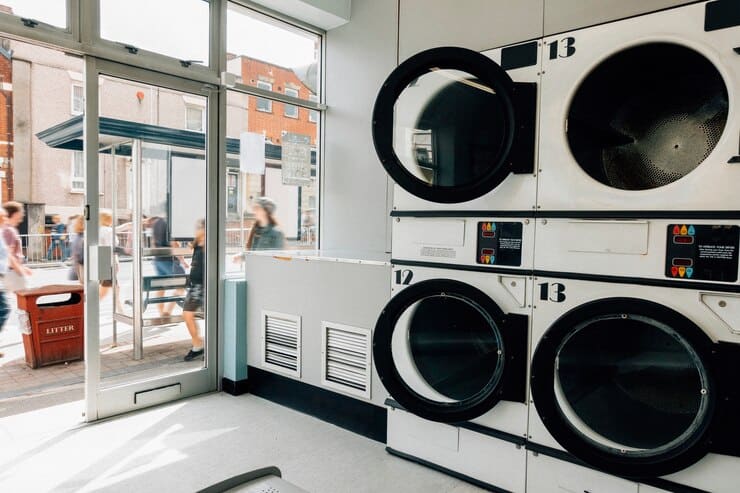
As an individual, if you are planning to make your mark in this evergreen business, then it will definitely give you profit, and you can expect your income to rise in the coming years. The laundry business continues to grow in Australia, and many Aussies have started small in this space.
As per IBISWorld’s latest figures, the industry has grown at an annualised 3.8% between 2021 and 2026, and now counts around 5,370 businesses nationally — a sign of a mature, resilient category rather than a fading one.
Starting from scratch, a laundromat business will need an initial investment between $100,000 and $400,000, but yes, the cost will also depend upon the size, rent, number of machines being used, equipment cost, etc.
2. Cleaning Business
Those looking for small business ideas will find that a cleaning business in Australia still makes a lot of sense in 2026.
What started as a pandemic-era necessity has become a permanent fixture — workplace hygiene is now built into how offices, schools and healthcare facilities operate, not just a temporary precaution.

With heightened awareness of the significance of workplace hygiene, businesses are going the extra mile to meet cleaning needs, and every organisation takes cleaning standards seriously. Cleaning services are not just limited to commercial settings in Australia; they encompass residential and industrial levels as well. Cleaning services include the cleaning of desks, upholstery, furniture, floors, sandblasting building exteriors, carpets, windows, steam cleaning, and much more. Small businesses often face unique challenges, but if you decide to start your own cleaning firm, there will be fewer challenges and more income. You will grow soon.
In Australia, the commercial cleaning industry now boasts a market size of $20.1 billion, featuring more than 44,000 registered businesses and over 209,000 employees (IBISWorld, 2025–26). The sector still offers a profit margin of typically 10% to 28%, and the range remains attractive for any small business owner. Every year, an average commercial cleaning business makes $70,000 to $100,000. The most profitable cleaning services are pressure washing, chimney cleaning, gutter cleaning, floor cleaning, etc.
Most Australian franchises for cleaning businesses are available between $5,000 and $50,000. Moreover, you need no formal education to start this business, and it is profitable in the long run.
3. Restaurant and Food Takeaway
The restaurant and food takeaway business in Australia remains one of the most profitable sectors for small businesses. Many small businesses that entered the food and restaurant industries became big in no time. Some food chains started so small, and today they have a big name in the market, like Black Star Pastry, T2 Tea, Zumbo Patisserie, Gelato Messina, and much more. Through innovation, quality, and dedication, many Australian small businesses have gained prominence.

Restaurants alone now generate $26.2 billion in annual revenue across nearly 30,000 businesses, cafes and coffee shops add a further $15.9 billion from about 28,000 venues, and fast food and takeaway services bring in $29.7 billion (IBISWorld, 2025–26). The industry continues to be one of the largest employers of small business owners in the country.
You must ensure compliance with health and safety regulations and meet your goods and services tax obligations to execute the food and restaurant business smoothly in Australia. Consider food franchise opportunities and list your business on a Google local listing. Also explore food delivery apps like Menulog, DoorDash, etc.
A café or small takeaway fit-out typically starts around $150,000–$400,000*, and net margins usually land in the 5–15% range once wages, cost of goods and rent are accounted for — tight, but workable for owners who keep a close eye on food costs and rostering.
4. AI-Powered Business Services
Here’s a category that simply didn’t exist on a list like this a few years ago: getting paid to help other small businesses actually use AI, instead of just talking about it. Everyone’s heard of ChatGPT by now — far fewer businesses have quietly automated their invoicing, set up a chatbot that handles after-hours enquiries, or built a workflow that stops a founder from manually copy-pasting data between five different apps. That gap is where this business idea lives.

The numbers on this one move depending on who you ask, and it’s worth knowing that upfront rather than quoting a single figure as gospel. MYOB puts AI tool usage among Australian SMEs at 29%, the National AI Centre’s tracker puts it closer to 37%, and a BizCover survey found 80% of small businesses are either using AI already or planning to within the next six to twenty-four months (MYOB; National AI Centre; BizCover, 2025–26). Whichever figure you trust, the pattern is the same: interest is well ahead of actual implementation, and that gap is exactly where a small consulting or automation business can step in.
In practice, that might mean setting up a customer-service chatbot, automating the admin a business owner dreads (invoicing, scheduling, chasing follow-up emails), building a simple Zapier or Make workflow, or just running a plain-English ‘here’s how this actually helps you’ session for a team that’s overwhelmed by the hype. You don’t need to be a machine learning engineer — most clients need someone who understands both the tools and their industry, not a research scientist. Startup costs are genuinely low since it’s a knowledge-based service; the real investment is your time staying current, because the tools themselves change month to month.
5. NDIS Support & Disability Services
The NDIS doesn’t always make it onto small business lists, but it probably should — it’s quietly become one of the largest and most stable sectors in the country for someone looking to build something meaningful rather than just profitable. The scheme now supports more than 739,000 participants through upwards of 21,700 registered providers, with total scheme spending reaching around $45 billion in 2025–26 (IBISWorld; NDIS Quarterly Report, 2025–26).

Growth has slowed from its earlier, almost unsustainable pace — down from 23% a year back in 2021–22 to something closer to 8–10% now — but that’s arguably good news if you’re looking to get in. It signals a market that’s maturing rather than one that’s about to burst.
Most small operators enter through support work, plan management, support coordination, or allied health support, and the margins genuinely differ by service type: plan management tends to sit at 30–50%, support coordination at 40–60%, and hands-on direct support work (the most staff-heavy option) at 20–40% (VCCG, 2025). Getting started means registering for an ABN, setting up a PRODA account, and — depending on what you offer — going through an NDIS Practice Standards audit, which can run anywhere from around $900 for lower-risk verification up to $15,000-plus for full certification. It’s a business with real compliance obligations attached, so budget the time and money for registration and insurance from day one rather than treating them as an afterthought.
6. Online Teaching Classes
Online teaching hasn’t slowed down since its pandemic-era boom — the online learner base keeps growing, so if you’ve got a good command of a subject like taxation, accounting, or a trade skill, there’s rarely been a better time to package that knowledge into a course.

As per your knowledge and expertise, you can choose the subjects you want to teach and create powerful, engaging course content. Learn the technicalities of running an educational website. Choose the price of a particular course and plan the schedule to begin with. Use promotional and marketing strategies for the online academy and spend on webcam, video camera, lighting, classroom backgrounds, editing software, etc.
Margins here are among the highest on this list, often 40–60%*, since the main ongoing cost is your own time rather than materials or rent. The main challenge isn’t technical, it’s marketing — standing out in a crowded space means building a following or reputation before the sales really pick up.
7. Online Fitness Training
Another lucrative venture that can be started as a small business in Australia is personal fitness training. This venture offers you the flexibility to choose your schedule and train. You can work independently or join fitness studios, gyms, etc. You can join a hospital too.

Today, health and fitness are given a lot of importance, so personal training is lucrative to pursue. At present, two-thirds of Australians engage in exercise for at least 100 minutes every two weeks.
The personal trainer segment is now valued at around $433.1 million, while the broader gym and fitness centre industry sits at $3.7 billion, even after a slight recent decline (IBISWorld; industry data, 2025). What’s shifted since the earlier pandemic-era numbers is the format — online and hybrid coaching now make up a meaningful share of the market, letting trainers build a client base well beyond their local suburb.
According to industry salary data, personal trainers earn up to $66 per hour, and trainers can always enhance their skills and earn more. Being a personal trainer means you must build knowledge in nutrition, strength and conditioning, weight loss, weight gain, rehabilitation, etc. In Australia, you need a Certificate III or IV to begin. You can look for opportunities on Airtasker and Bark.com, and you can also list your business on Google.
8. Online Retailing / E-commerce
Online retailing, or e-commerce, is a small business concept that is in constant demand. Many companies started small but became big giants. Online shopping has changed things, so it is the new norm, and shoppers are interested in buying products online and making online payments securely. They like the purchases to be delivered at their doorstep conveniently.

Nearly 9.8 million Australian households now shop online regularly, and the online shopping industry is worth around $60–65 billion a year, spread across roughly 116,000 businesses that have grown at over 7% annually since 2020 (IBISWorld, 2025–26). Categories like homewares, apparel and — increasingly — food and beverages continue to expand, aided by faster delivery, Buy Now Pay Later options, and social commerce through Instagram and TikTok.
This is still an opportune time for those seeking small business ideas who want to start earning online. You can sell anything online, like jewellery, clothes, makeup items, art, etc. A vast expanse of the internet is there to help you, and you can also use established platforms like Amazon and eBay, or build your own store with Shopify, to promote your business.
9. UGC & Content Creation for Brands
If someone had told you five years ago that filming yourself talking about a face cream in your kitchen could be a legitimate small business, you’d probably have laughed. In 2026, it’s exactly that — and it doesn’t require a huge following to get started, which is the part most people get wrong when they dismiss it.

Unlike traditional influencer marketing, UGC (user-generated content) creators are paid directly by brands to produce authentic-feeling videos and photos — unboxings, testimonials, quick demos — that the brand then owns and runs as ads on its own channels. Australian brands spent an estimated $830 million on influencer and creator marketing over the past year, a 13.5% year-on-year increase, and creators with as few as a few dozen followers can land paid briefs if their content actually converts (industry data, 2025–26).
Most Australian creators charge somewhere between $150 and $300 per video once they’re established, with beginners often starting closer to $100 and experienced creators charging $500-plus, particularly once usage rights and licensing fees come into the conversation. All you really need to start is a smartphone, a basic ring light, a clip-on microphone (around $30–$80) and free editing software like CapCut — total setup cost is often under $500. Worth knowing before you start: UGC income counts as assessable income in Australia, so you’ll need an ABN once you’re earning regularly, and GST registration once turnover crosses $75,000.
10. Website Development
If you are looking for one of the best small profitable business ideas that’s interesting, hands-on, and lucrative, then website development is worth a look. Demand for professional web design keeps growing as more small businesses realise they need a proper online presence, not just a Facebook page.

The web design services industry in Australia is now worth $1.5 billion, spread across nearly 3,600 businesses that have grown at an average of 3.6% a year since 2021 (IBISWorld, 2026). A striking number of Australian small businesses — around 46%, by some estimates — still don’t have a website at all, or are running something outdated, which keeps demand for this work healthy.
Web development empowers businesses to establish an online presence, enhancing accessibility, visibility, and customer engagement. With professional services like WebCreationAU reviewed by Adam, businesses can leverage tailored solutions for effective digital representation, driving growth and success in the competitive online landscape.
If you have any coding skills or are eager to learn them, then this can be your start. Plenty of successful small operators build sites using WordPress, Squarespace or Webflow, layering on services like SEO setup, copywriting or ongoing maintenance retainers for recurring income — startup costs are genuinely low, often under $10,000, and agencies in this space typically report profit margins of 15–25%.
Related Article:
Australian Startup Ecosystem 2025: Sydney vs. Melbourne and the Rise of Deep Tech Investment
Why Australian Small Businesses Are Failing In Early Stages
Time To Prepare For Aussie Small Businesses
How A Lawyer Can Aid You In Enforcing Your Trademark In Australia
Final Thoughts:
Consider these small profitable business ideas to embark on your entrepreneurial journey and contribute to the thriving small business community that drives the nation’s economy. The idea doesn’t have to be unique all the time, but it must have the potential to capture a market that can give you good returns. So, think well, plan out what all you can do and then decide which business is best suited for you in Australia. So, Aussies, follow your passion but make sure it gives you profit so you keep going and growing in your career.