If there’s one rule to take from this article, it’s this one: never eat a wild mushroom in Australia unless someone qualified has told you, specifically, that it’s safe. Not “pretty sure.” Not “looks like the ones from the shops.” Positively identified, by an expert, every time. The most dangerous of the poisonous mushrooms Australia has to offer is the death cap (Amanita phalloides), responsible for roughly nine out of every ten fatal mushroom poisonings recorded in Victoria, and it looks disarmingly like something you’d happily throw in a risotto. Mushroom poisoning symptoms often don’t show up for six to twenty-four hours, by which point the damage to your liver may already be underway. That delay is exactly what makes these fungi so dangerous, and exactly why “I’ll just try a little bit” is such a bad idea.
This isn’t an abstract risk either. In 2023, a family lunch in regional Victoria ended in tragedy when three people died after eating death cap mushrooms hidden inside a beef Wellington. The case has since gripped the country, and its outcome says a lot about just how lethal this particular fungus really is.
The Leongatha Case: How One Meal Became a National Story
In July 2023, Erin Patterson hosted her estranged husband’s parents, Don and Gail Patterson, along with Gail’s sister Heather Wilkinson and Heather’s husband Ian, for lunch at her home in Leongatha, Victoria. Her husband, Simon, was invited but didn’t attend. The meal was individual beef Wellington parcels, and within days, three of the four guests were dead.
Investigators found the meal contained death cap mushrooms. A lengthy trial followed, and in July 2025 a jury found Patterson guilty of three counts of murder and one count of attempted murder. She was sentenced that September to life in prison with a non-parole period of 33 years, one of the longest sentences ever handed to a woman in Australia. Patterson has consistently maintained the poisoning was accidental, and as of mid-2026 she’s appealing both her conviction and her sentence, with a hearing listed for August. Prosecutors have lodged a separate appeal too, arguing the sentence handed down was too lenient.
Whatever the appeal decides, the facts about the mushroom itself haven’t changed. Death cap mushrooms are lethal in small amounts, they’re increasingly turning up across southern Australia, and no amount of cooking, peeling, or drying makes them safe.
What Do Australian Health Authorities Say About Foraging Wild Mushrooms?
The advice from health departments across the country hasn’t really changed, if anything it’s gotten firmer: don’t forage wild mushrooms Australia-wide unless you’re doing it alongside a genuine expert, and even then, treat every find with caution. Victoria’s Department of Health puts it plainly, there’s no home test that can tell a safe mushroom from a poisonous one, and the only mushrooms guaranteed safe to eat are the ones bought from a supermarket, greengrocer, or other reputable seller.
The Australian Mushroom Growers Association backs this up, warning that even specialists can struggle to tell a poisonous look-alike from an edible mushroom out in the field. Commercially grown mushrooms, by contrast, are produced under strict food safety rules, which is exactly why they don’t carry the same risk.
Mushroom Poisoning in Australia: What Recent Numbers Show
The scale of the problem is bigger than a lot of people realise, and it’s trending the wrong way. In New South Wales, the Poisons Information Centre logged 363 calls in 2024 about wild mushroom exposures across NSW and the ACT, a jump of 26% on the year before, according to research published by UNSW in 2025. Death cap mushrooms, once considered mainly a Victorian and ACT problem, have now been confirmed in Tasmania, South Australia, and, more recently, New South Wales too, and it’s likely they exist in other states we simply haven’t detected yet.
In Victoria specifically, health authorities estimate that around nine in ten fungi-related deaths are caused by a single species, the death cap. That’s a striking concentration of risk sitting in one mushroom, and it’s the main reason state health departments issue seasonal warnings every autumn, as wetter, cooler weather triggers a flush of wild growth in parks, gardens, and under introduced oak and hazel trees. Cases of mushroom poisoning Australia-wide tend to spike in exactly this window, so if you’re gardening or bushwalking between March and June, it pays to be extra cautious.
Poisonous Mushrooms Found in Australia
Here’s a rundown of the most dangerous mushrooms Australia has growing wild, along with a few notorious toxic species from overseas that occasionally get mentioned in the same breath, even though you’re very unlikely to run into them here.
1. Death Cap (Amanita phalloides)
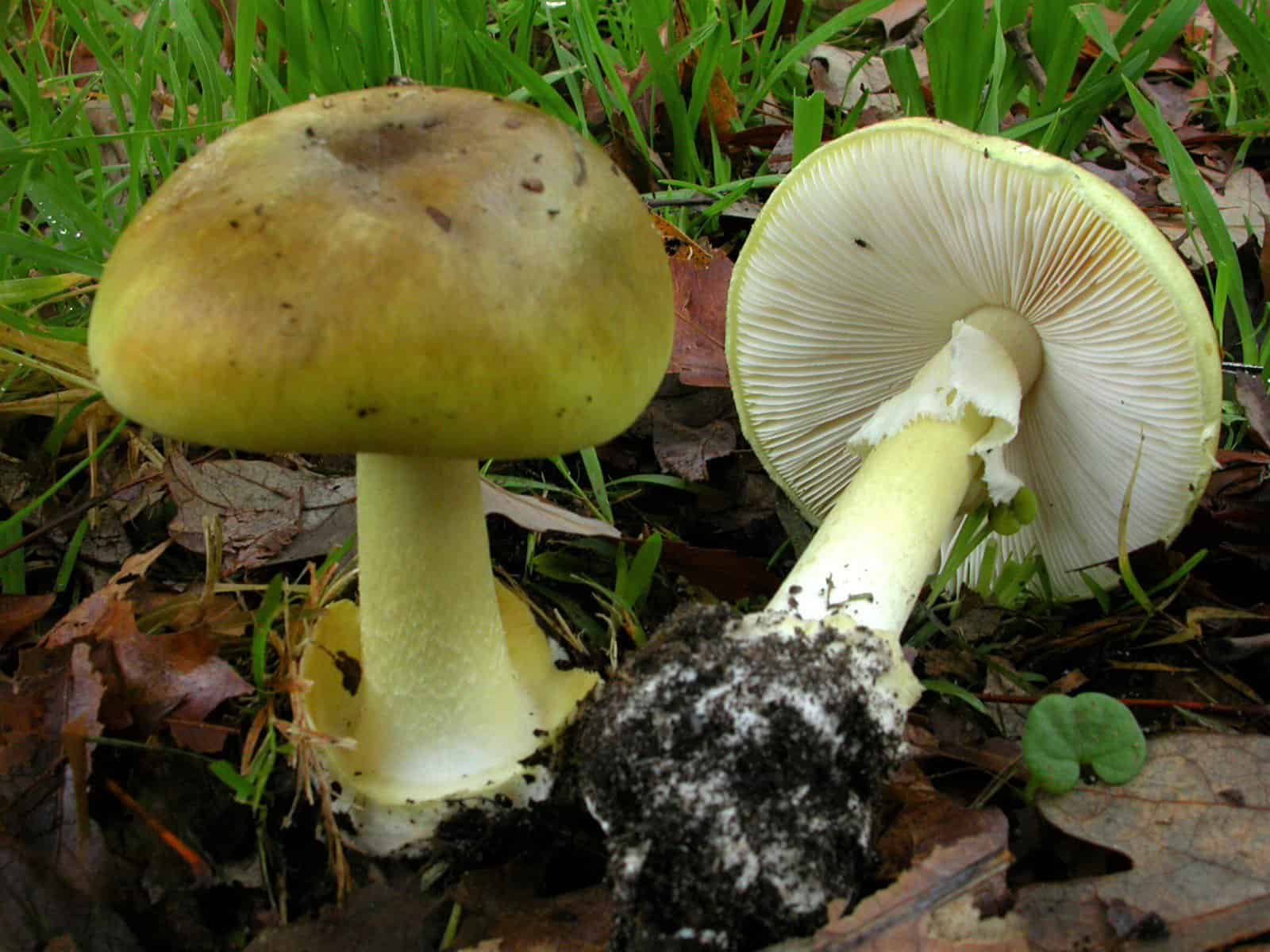
The single most dangerous mushroom on this list, and not native to Australia at all. Death caps arrived on introduced European oak and hazel trees and have since been detected in Victoria, the ACT (with the highest concentration around Canberra), Tasmania, South Australia, and, as of recent seasons, New South Wales. The cap ranges from pale yellow to olive-green, the gills are white, and there’s a distinctive cup-like membrane at the base of the stem. Symptoms usually begin 6 to 24 hours after eating (occasionally later), starting with severe abdominal cramps, vomiting, and diarrhoea. These symptoms can then ease off for a couple of days, creating a false sense of recovery, before liver and often kidney failure set in. In 2024, a 98-year-old Victorian woman died after eating death caps picked from her own garden. Consuming even one is potentially fatal, and the toxin survives cooking, peeling, and drying completely intact.
2. Yellow-Staining Mushroom (Agaricus xanthodermus)
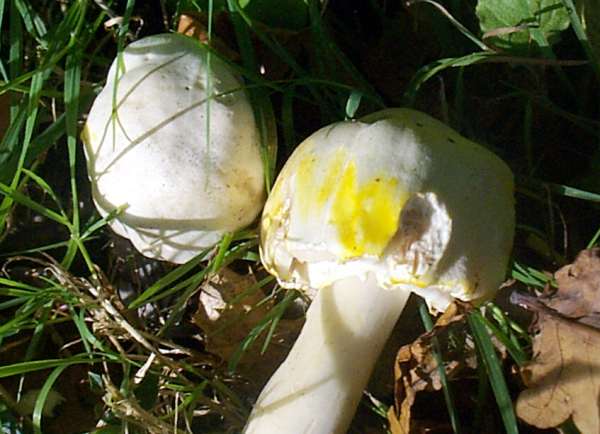
This is the mushroom responsible for the most poisoning cases in Australia overall, even though it’s rarely life-threatening. It looks a lot like the field and button mushrooms sold in shops, but the flesh stains bright yellow when cut or scratched, especially near the base of the stem. Symptoms tend to come on fast, usually within 40 minutes to 4 hours, and include nausea, vomiting, and severe stomach cramps, occasionally with vomiting severe enough to cause dehydration. Most people recover within a few days, though reactions can vary a lot between individuals, and some people tolerate it once and then react badly the next time.
3. Ghost Fungus (Omphalotus nidiformis)
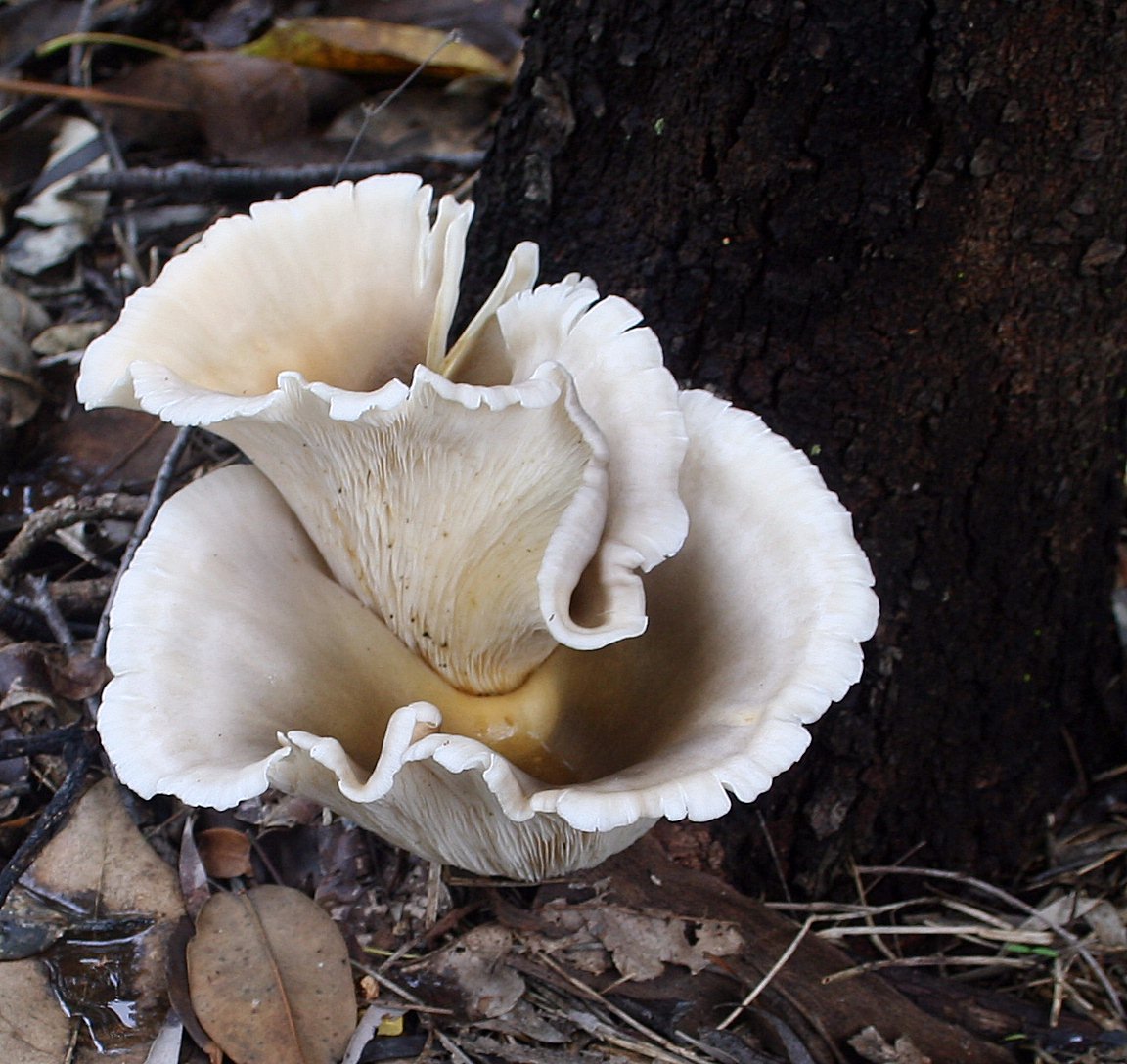
A genuinely Australian species, and a strange one. Ghost fungus glows faintly green in the dark thanks to a chemical reaction in its gills, and it’s often mistaken for oyster mushrooms by foragers who don’t know to look for the glow. Eating it typically causes significant gastrointestinal upset rather than organ damage, but the vomiting and cramping can be severe enough to warrant medical attention, particularly in children.
4. Webcaps (Cortinarius species)
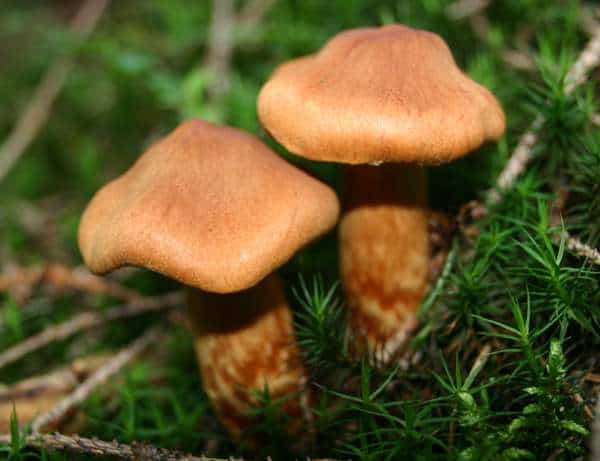
The fool’s webcap and deadly webcap fall into this group, and both closely resemble edible varieties. They contain a toxin called orellanine, which causes flu-like symptoms and, eventually, kidney failure. What makes webcaps especially dangerous is the delay: symptoms can take anywhere from two days to three weeks to show up, which frequently leads to misdiagnosis. In 2008, English author Nicholas Evans mistakenly served webcap mushrooms to his family, and several relatives, including Evans himself, ultimately needed kidney transplants as a result.
5. Autumn Skullcap / Deadly Galerina (Galerina marginata)
A small, unassuming brown mushroom that grows on rotting wood and carries the same amatoxins found in death caps. It’s widespread across the Northern Hemisphere but has also been recorded in Australia, and it’s exactly the kind of “little brown mushroom” that gets scooped up accidentally by people foraging for something else entirely. Symptoms follow the same pattern as death cap poisoning: gastrointestinal illness first, then a deceptive lull, then liver damage.
6. Green-Spored Parasol Relatives (Chlorophyllum species)

Common in lawns and gardens after rain, these mushrooms are frequently mistaken for edible parasol mushrooms. They don’t carry amatoxins, but they do cause intense gastrointestinal symptoms, severe enough that many people end up in an emergency department even though the poisoning isn’t usually life-threatening.
Other Notorious Toxic Species (Rarely, If Ever, Found in Australia)
A few species show up constantly in global lists of the world’s most poisonous mushrooms, and it’s worth knowing the names, even though none are established in the Australian wild. Destroying angels (several white-gilled Amanita species, most infamously Amanita bisporigera) are a serious hazard in North America. Conocybe filaris is a lawn mushroom found in the Pacific Northwest with death-cap-level toxins. Podostroma cornu-damae is a rare, strikingly red fungus responsible for fatalities in Japan and Korea. The deadly dapperling (Lepiota brunneoincarnata) causes severe liver toxicity across parts of Europe and Asia. If you’re travelling overseas and foraging comes up, the same rule applies everywhere: don’t eat anything you haven’t had positively identified.
You may also like:
What Is Food Insecurity? How Australian Are Suffering From It?
Australia Releases A Strategic Plan To Stop Food Waste
Traditional Foods Of Australia and The History
Mushroom Poisoning Symptoms: What to Watch For
Symptoms vary depending on the species involved, but the pattern linked to death cap and its amatoxin relatives is the one worth knowing best, because it tricks people into thinking they’re getting better right before things get much worse.
Phase one, roughly 6 to 24 hours after eating: sudden, severe abdominal cramping, vomiting, and watery diarrhoea. This is often mistaken for a stomach bug or ordinary food poisoning.
Phase two, around day 2 to 3: symptoms can ease off, sometimes almost completely. This apparent recovery is the dangerous part, because it isn’t real. The toxin is still quietly working on the liver.
Phase three, roughly days 3 to 6: liver and often kidney function deteriorate, sometimes quickly. Without treatment, this can progress to liver failure, coma, and death.
Not every poisonous mushroom follows this timeline. The yellow-staining mushroom and ghost fungus cause symptoms much sooner, usually within a few hours, and are rarely life-threatening on their own. Webcap poisoning sits at the opposite extreme, with symptoms sometimes taking two days to three weeks to appear, by which point kidney damage may already be well underway.
The practical takeaway on mushroom poisoning symptoms: any gastrointestinal illness following the consumption of a wild mushroom, however mild it seems at first, deserves urgent medical attention. Don’t wait around to see whether it gets worse before acting.
Prevention and Safety: What to Do Around Wild Mushrooms
Safe Foraging Practices (If You Forage At All)
Only forage with, or under the direct supervision of, a qualified mycologist. Field guides and phone apps aren’t reliable enough to trust on their own.
Ignore old wives’ tales about safety tests. Peeling a mushroom, cooking it, or checking whether insects have nibbled it tells you nothing about whether it’s safe for humans.
Treat any all-white, white-gilled mushroom with real suspicion. A large share of fatal poisonings globally involve white-gilled Amanita species.
Keep children and pets away from mushrooms growing in the garden. If you’re not certain what something is, remove it and dispose of it where kids and animals can’t reach it.
When in doubt, don’t. There’s no shame in leaving a mushroom exactly where it’s growing.
What to Do If You Suspect Mushroom Poisoning
Don’t wait for symptoms. If you know or suspect a wild mushroom has been eaten, act immediately, even if the person feels completely fine right now.
Call the Poisons Information Centre on 13 11 26, available 24 hours a day, Australia-wide, for immediate advice.
If someone is unwell, vomiting persistently, having seizures, or their condition is worsening, call Triple Zero (000) for an ambulance straight away.
Try to keep a sample of the mushroom, or at least a clear photo of it, and bring it to hospital. It can help clinicians identify the toxin and choose the right treatment quickly.
Don’t try to induce vomiting unless a health professional specifically tells you to.
Common Mistakes People Make When Identifying Wild Mushrooms
Assuming “it looks like the mushrooms from the shop” is good enough. Several of the deadliest species are near-identical to common edible varieties.
Judging safety by smell or taste. Death caps are frequently described as pleasant-smelling and mild-tasting, which offers no protection at all.
Relying on a single identifying feature. Genuine identification depends on multiple characteristics together, gill colour, spore print, stem base, habitat, and season, not just one.
Assuming a mushroom must be safe because animals, birds, or insects have been eating it. Plenty of creatures can safely eat mushrooms that are lethal to humans.
Foraging in public parks and gardens without realising the risk, especially around introduced oak or hazel trees, exactly where death caps like to grow.
The Bottom Line
Nature’s fascinating, and honestly, a bit unsettling once you start reading about mushroom poisoning in detail. Staying cautious around poisonous mushrooms Australia-wide isn’t about being paranoid, it’s just common sense. Admire them where they grow, photograph them if you like, but leave the eating to mushrooms you’ve bought from somewhere that can actually vouch for them.
Frequently Asked Questions
What are the most poisonous mushrooms in Australia?
The death cap (Amanita phalloides) is by far the most dangerous, responsible for around nine in ten fungi-related deaths in Victoria alone. Other seriously toxic species found in Australia include webcaps (Cortinarius), the deadly galerina (Galerina marginata), and the yellow-staining mushroom, which causes the most poisoning cases overall, though it’s rarely fatal.
How can you identify poisonous mushrooms?
Honestly, you largely can’t, not reliably, and that’s exactly the point. Even experienced mycologists sometimes struggle to distinguish poisonous mushrooms from edible look-alikes in the field, and there’s no home test that can confirm safety. The only genuinely reliable approach is having any wild mushroom positively identified by a qualified expert before going anywhere near eating it.
What should you do if you eat a toxic mushroom?
Call the Poisons Information Centre on 13 11 26 immediately, even if you feel completely fine at the time. If symptoms are severe or rapidly worsening, call Triple Zero (000) for an ambulance without delay. Don’t wait to see whether symptoms develop, and try to keep a sample or photo of the mushroom to help doctors identify what’s involved.
Are all wild mushrooms in Australia safe to eat?
No, and there’s no simple way to tell which ones are. Australia has thousands of wild fungi species, and by some estimates, most have never been properly tested for edibility at all. Every state health department recommends buying mushrooms from supermarkets or reputable growers instead of foraging them yourself.
Which poisonous mushroom causes the most serious poisonings in Australia?
The death cap causes the most serious and most fatal poisonings by a clear margin, accounting for roughly nine in ten fungi-related deaths in Victoria. It’s increasingly being found in the ACT, Tasmania, South Australia, and New South Wales, usually growing near introduced oak and hazel trees in parks and gardens.