Here’s the honest answer: most small businesses in Australia don’t fail because the idea was rubbish. They fail because the owner ran out of cash, didn’t plan for the slow months, or got blindsided by costs nobody warned them about. Right now, the small business failure rate in Australia sits at around 20% in year one, and by year three that climbs to somewhere near 60%, going by ASBFEO figures and the ABS’s entry-exit data for 2024–25. Add in higher interest rates, a tight labour market, and AI reshaping whole industries seemingly overnight, and it’s not hard to see why small businesses fail in Australia at the rate they do. The good news is that most of it is avoidable, once you know what you’re actually up against.
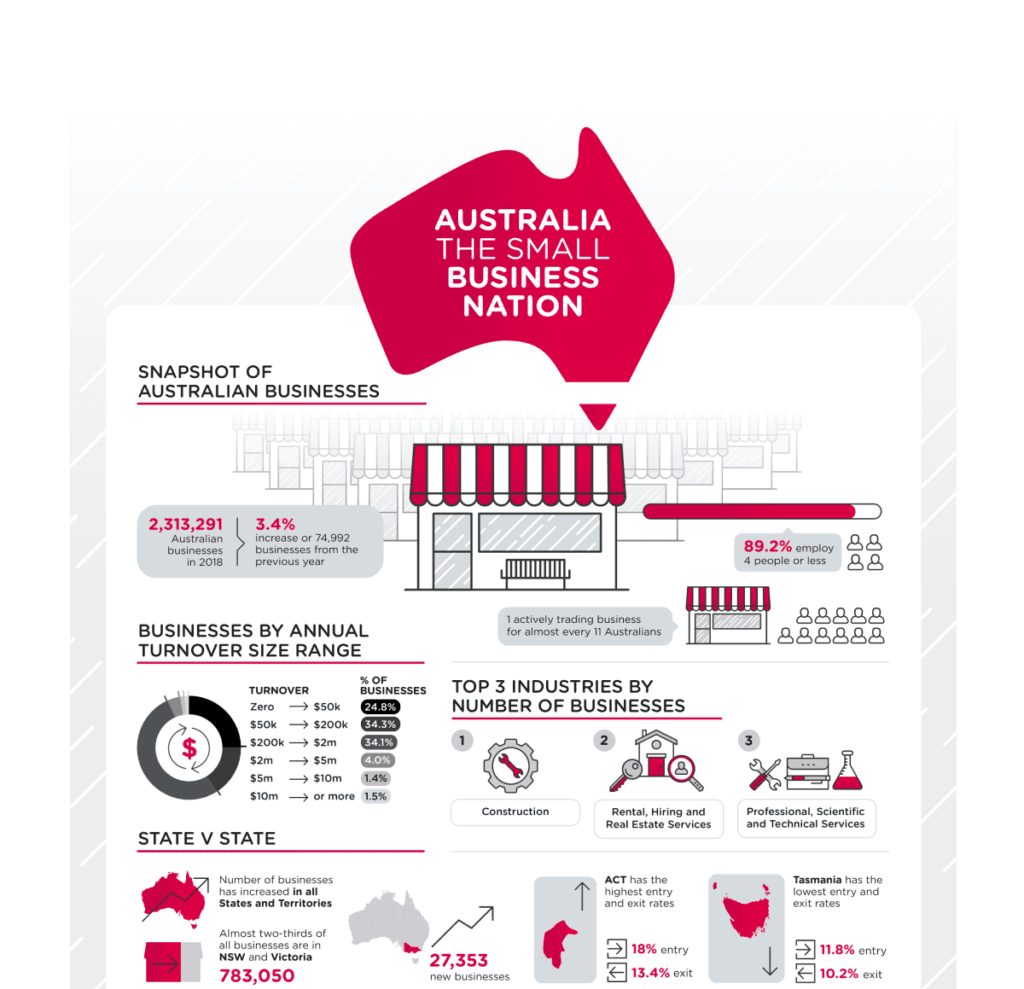
A quick reality check on the numbers: as of 30 June 2025, Australia had 2,729,648 actively trading businesses, and about 98% of those count as small (fewer than 20 employees), according to the ABS’s Counts of Australian Businesses data. Look past that headline figure, though, and the churn underneath is brutal. 437,150 new businesses opened their doors over the year, while 370,500 shut them for good, one of the biggest exit tallies on record, according to AFSA and ASIC’s insolvency data.
Australia’s Small Business Failure Rate in 2026: What the Numbers Actually Say
Two separate reports came out in late 2025, and they tell the same story: things are getting harder, not easier. Experian and illion’s Commercial Risk Barometer found that the number of Australian businesses at moderate-to-high risk of failure jumped 4.5% in the nine months to June 2025, well ahead of the 2.9% growth in actively trading businesses over the same stretch. It’s the smallest and youngest operators feeling it most. Micro-businesses under six years old, turning over less than $500,000 a year, now have an 8% chance of being rated at very high risk of failing within the next twelve months. That’s four times the rate of their more established competitors.
The Australian Institute of Credit Management backs this up. Their October 2025 data puts the average business failure rate at 5.04%, up from 3.97% just a year earlier, and closing in on the pandemic-era high of 5.08% recorded back in October 2020. ASIC’s own numbers add to the picture too: 3,556 companies went into external administration in just the first quarter of the 2025–26 financial year.
So Why Do Small Businesses Actually Fail in Australia Right Now?
The list of reasons hasn’t changed all that much over the years: bad planning, weak marketing, running out of money. But a handful of newer pressures have stacked on top of the old ones, and they’re worth calling out on their own. Here’s what’s actually squeezing small business challenges Australia-wide in 2026:
- Cash flow, plain and simple. Rent’s up, insurance is up, wages are up, and revenue isn’t always keeping pace. Little wonder 43% of owners named tight cash flow their number one concern in the 2025 State of Australian SME Report.
- Interest rates that won’t ease off. Borrowing to cover stock, staff, or a bit of growth costs more than it used to, and the ATO has gone back to actively chasing the roughly $35 billion small businesses still owe it (AICM, 2025).
- Payroll got a lot more complicated. Single Touch Payroll Phase 2, super now locked in at 12%, and Payday Super arriving from 1 July 2026 all add up to extra admin for owners who never budgeted for a payroll department.
- Competing with everyone, everywhere. Skip a strong online presence and you’re handing customers to businesses that are easier to find, often bigger and better resourced too.
- Cyberattacks aren’t rare anymore. The Australian Cyber Security Centre logged a cyber incident every six minutes in 2024, with small businesses squarely in the firing line. It’s no surprise 42% of business leaders now rank cyber risk among their top three threats, per KPMG.
- AI is moving faster than a lot of businesses can keep up with. Whole categories of admin, content, and customer service work are shifting in real time. Adapt slowly and you risk getting undercut, or watching customers just handle it themselves with a chatbot.
None of that replaces the old classics, either: patchy record-keeping, weak management, marketing that never really got off the ground, misjudging what customers actually want. Those problems haven’t gone anywhere. They’ve just picked up some new company, and together they’re the real small business challenges Australia is dealing with heading into 2026.
Quick Facts: Australian Small Businesses in 2026
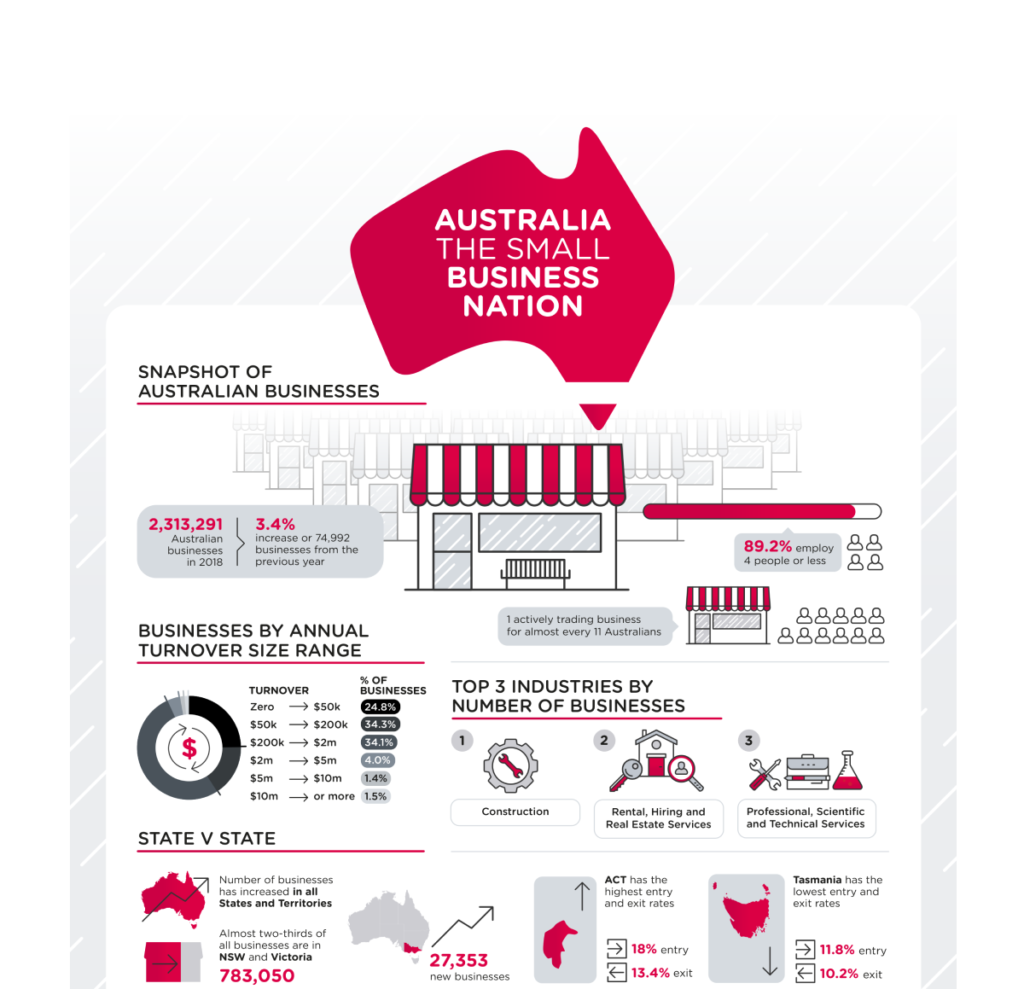
- 2,729,648 actively trading businesses as of 30 June 2025, roughly 98% of them small (fewer than 20 employees) — ABS, 2025
- Small businesses contribute around a third of GDP and employ more than 7 million people nationally (ASBFEO/Lawpath, 2026).
- 63.6% of all Australian businesses now have no employees at all. Solo operation is fast becoming the default, not the exception (ABS, June 2025).
- Employing businesses reach the three-year mark 61% of the time, versus 43.3% for solo operators (ABS 2024–25 analysis).
- Construction is still the biggest small business sector at 17%, with professional, scientific and technical services close behind at 13% (Australian Banking Association, 2025).
- Small business sales grew 6.7% year-on-year in late 2025, led by construction and healthcare, even as failure risk was climbing (Xero Small Business Insights, 2025).
Common Reasons Small Businesses Fail (In Detail)
Insufficient Research

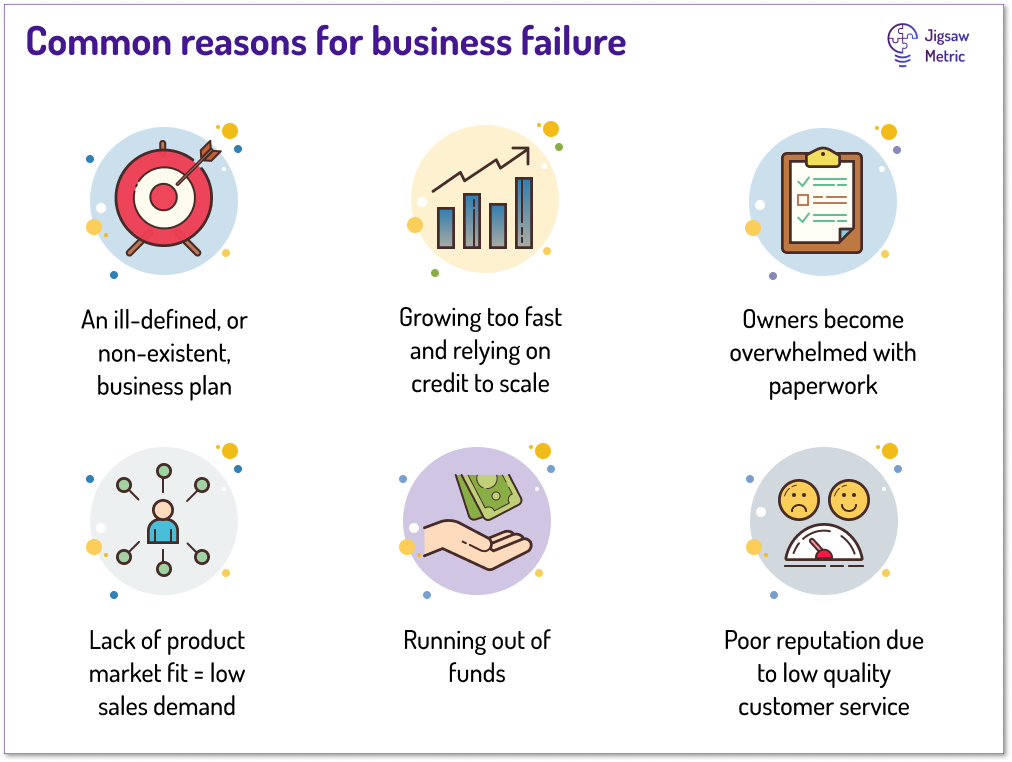
One of the most common reasons for new businesses failing is that there is no demand in the market for their goods or services. Knowing who your competitors are, who your target audience is, and what will motivate them to do business with you are some of the most important first steps you need to take when you are setting up a business. Other important first steps include researching everything about the current market and the current and future trends in your industry.
Not Having a Proper Business Plan
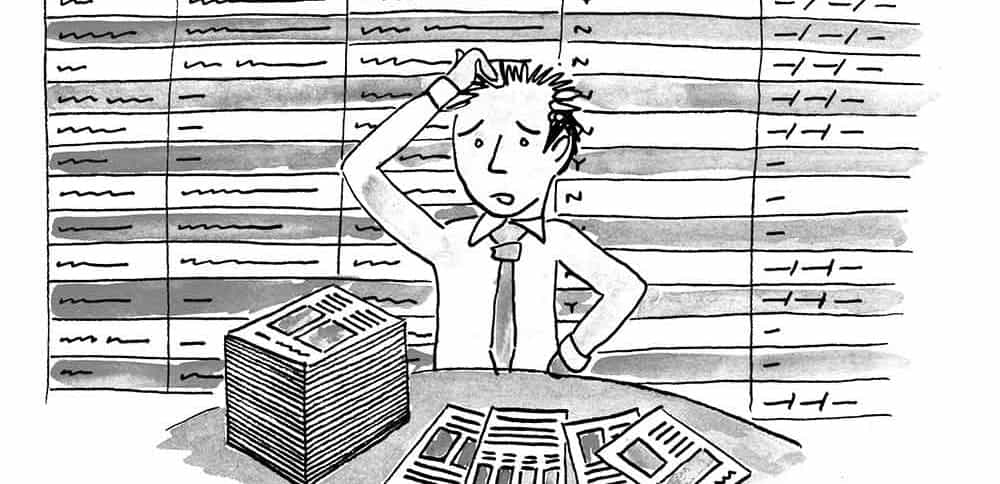
A strong business plan may help you decide the direction of your business, an action plan to help you achieve your goals, and get the capital you need to start or grow your business. However, failing to have a plan exposes your organisation to mismanagement, which is one of the most common reasons for small business failure. A business plan can also help you stay organised and on task.
Lacking the Necessary Business Financing
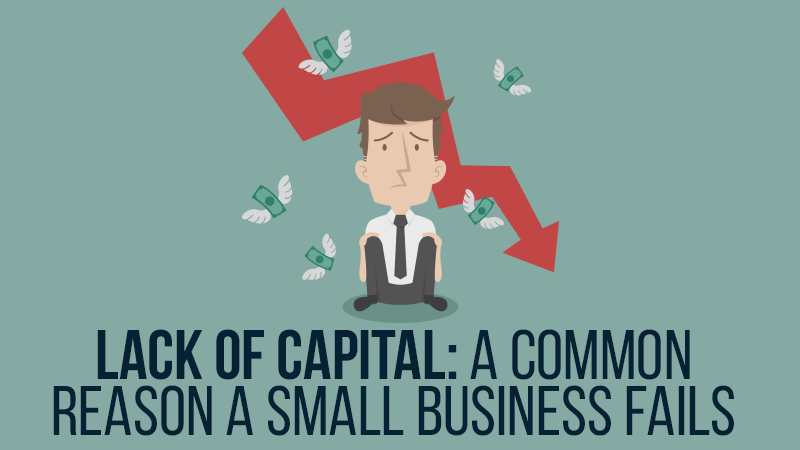
Many small business entrepreneurs fall into the trap of running out of money or not realising the costs associated with starting and maintaining a business. The truth is that not every owner of a small business has the resources to pay the startup fees of a new venture. Therefore, you should incorporate the fixed and variable expenditures associated with starting your business while creating your business plan.
Remember that money is king at all times. It is crucial to bargaining in all areas of your organisation because cash flow problems can cause even profitable companies to fail. Avoid making customers wait too long to pay for your goods and services, and always work to negotiate payment terms with your suppliers that meet the expectations and requirements of your business in terms of cash flow.
Poor Marketing

You have a serious issue on your hands if all of your capital is going towards product development and none is left over for marketing.
A good marketing strategy will strike the right balance between acquiring new customers (new customer acquisition), and cultivating a base of devoted existing customers, depending on the nature of your business and who your target audience is (retention).
Achieving the balance between “conventional” offline marketing operations (including advertising, direct mail, letterbox drops, local area marketing, posters and flyers, and business-to-business marketing) and online marketing (including having a website for your business and using social media for business pages to target your audience) can be challenging sometimes. If marketing isn’t your expertise, engage an experienced marketer or hire a marketing firm. However, whatever you decide, be sure it has a track record of success in your sector.
Failing to Keep Up with New Market Demands or Trends
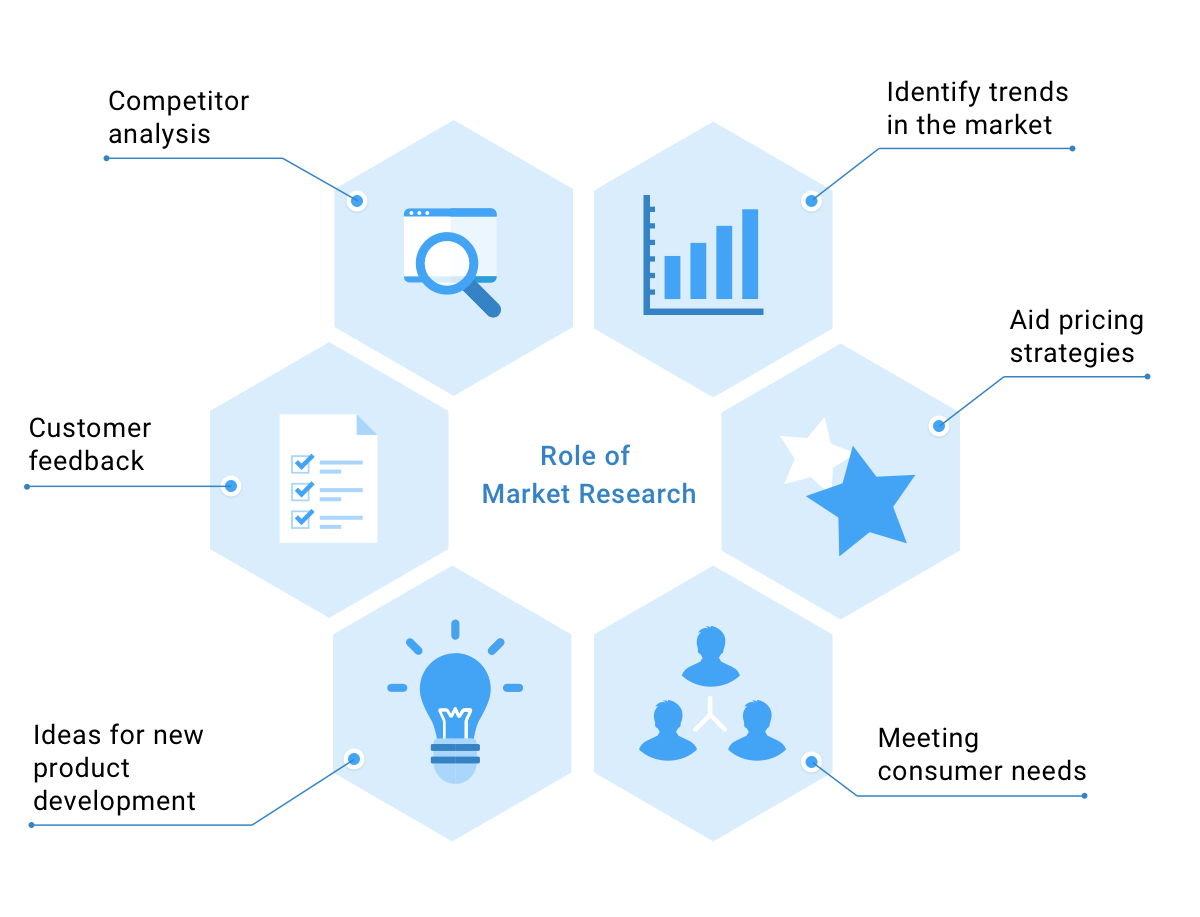
Building a loyal customer base requires an understanding of your target audience and knowing how to relate with them. To make sure that you stay on top of your client’s needs, you must also have strategies in place. You run the danger of losing those loyal customers to your competitors if you don’t understand what they want from you (via customer feedback surveys, watching and responding to comments on your social media business pages, and just plain talking to your customers).
Speaking of rivals, if they’re outperforming you, it might be time to see what they’re doing differently. Have a look at the latest Australian small business trends and figure out what you’re missing.
Limited Experience

Without a doubt, this is among the most common reasons for a small business to fail in its first year of operation. Lack of planning and poor business analysis reduces the chances of success for inexperienced business owners. If your business doesn’t have enough funding, the problem will get worse.. Everything will collapse if one of these elements breaks down.
Poor Location

This is just another death sentence for small businesses that depend majorly on foot traffic. As a result, small firms that are not located in metropolitan cores or other regions with heavy traffic or densities of people are more likely to declare bankruptcy than those that are more well-known to the general public.
Poor Financial Management

Cash flow is still where most financial management breaks down. Forty-three per cent of owners rank it as their biggest worry (State of Australian SME Report, 2025), and here’s the kicker: plenty of these are businesses that look profitable on paper but still can’t pay the bills on time (Xero Small Business Insights, 2025). Financial trouble creeps in fast once management gets sloppy or credit gets out of hand, especially when sales fall short of what was budgeted.
Inability to Adapt

Like in life, things don’t always go according to plan in small businesses. It’s inevitable that your business will encounter obstacles along the way, whether it’s responding to shifting trends within your industry, unforeseen occurrences (like the COVID-19 pandemic or natural disasters), the impact of broader economic issues (such as changes to interest rates, government assistance and support), or even changes to your personal situation (due to illness or other challenges). To survive, you might need to change course from a bad hire, an unwise business decision, or an incorrect product or service. The most crucial thing in this situation is to keep aware of what is occurring both inside and outside of your company and to be prepared to react – quickly!
These days, that same warning applies just as much to AI and cybersecurity. Either one can turn a business model upside down, or expose customer data, pretty much overnight if you’re not paying attention.
Failing to Recruit and Keep the Correct Personnel

Hiring, managing, and keeping employees is one of the main difficulties small business owners confront. In the long term, it will be beneficial for you to build a varied workforce with complementary skill sets, the proper attitude, and values that are in line with your company. It’s crucial to not only find the proper candidates but also foster an environment at work that encourages long-term employment.
It hasn’t gotten any easier lately either. Between Single Touch Payroll Phase 2 and super locked in at 12%, plenty of owners are choosing contractors or automation over actually growing their team, not because they want to, but because the admin makes it harder to justify (ABS, 2025).
Also Read:
Australian Startup Ecosystem 2025: Sydney vs. Melbourne and the Rise of Deep Tech Investment
10 Australian Startups In 2023 That Can Change Aussie Lifestyle
Top Australian Start-Ups For Stock Traders To Watch
From A Design Teacher To An Entrepreneur: A Billon Dollar Story Of “Canva”
How Many Small Businesses in Australia Are Successful?
Size and structure still matter when it comes to survival. Businesses that take on staff make it to the three-year mark 61% of the time, according to ABS data for 2024–25, while solo operators manage it just 43.3% of the time. Makes sense when you think about it: hiring someone forces you to build proper systems earlier, ready or not. Zoom out further and the broader estimates line up too, with roughly 80% of businesses surviving year one (that 20% failure rate again) and about 40% still standing by year three (the 60% figure). None of this is a reason to panic. Most businesses that fail do so for reasons you can actually see coming and act on. It’s rarely just bad luck.
Small businesses in Australia are still less likely to survive than the big corporations, purely on the numbers. That shouldn’t put anyone off, though. Building something that lasts as an Australian small business is genuinely rewarding, and this environment rewards exactly the kind of planning and financial discipline that separates the ones that make it from the ones that don’t.
Why Do Startups Fail in Australia?
Startups have it tougher again. Somewhere between 70% and 90% fail within five years, and the reasons are almost always the same three things: nobody actually wanted what they were selling, they ran out of money, or the founding team wasn’t right for the job. That’s the pattern CB Insights keeps finding globally, and it holds up locally too. Australia’s had its share of high-profile examples, from collapsed quick-commerce darlings to a neobank that handed back its licence, proof that serious funding doesn’t buy immunity. Strip away the headlines and startup failure Australia-wide comes down to the same root causes as small business failure generally. It just happens faster, and burns through a lot more cash on the way there.
How to Avoid Business Failure in Australia
- Forecast monthly, not once a year. A rolling forecast catches a cash flow problem while you can still do something about it.
- Get paid faster. Clear payment terms, a few automated reminders, and digital invoicing all chip away at your debtor days.
- Line up credit before you’re desperate for it. Flexible facilities are much easier to negotiate when you don’t actually need the money yet.
- Don’t skip cybersecurity just because you’re small. The ACSC’s Essential Eight is a practical starting point even for a two-person operation.
- Let AI handle the boring stuff. Use it to speed up admin and cut costs, but keep a human eye on anything customer-facing or compliance-related.
- Talk to someone before it becomes a crisis. An accountant or mentor catching an issue in month three is a lot cheaper than a liquidator finding it in year three.
- Check your plan and pricing twice a year against what’s actually happening in the business, not what you assumed back at launch.
Frequently Asked Questions
Why do small businesses fail in Australia?
Mostly it comes down to cash flow, rising costs, and not planning far enough ahead, with high interest rates, labour shortages, and AI or digital competition making things harder on top of that. Weak record-keeping and thin marketing budgets are common culprits too. Bad luck rarely deserves the blame it gets; most failures are things owners could have seen coming.
What is the small business failure rate in Australia?
Around 20% of Australian small businesses fail in their first year, climbing to roughly 60% by year three, based on ABS and ASBFEO figures. The broader business failure rate hit 5.04% in October 2025 according to the AICM, up from 3.97% the year before, a sign that trading conditions have genuinely gotten tougher.
What is the biggest reason startups fail?
No contest: it’s building something nobody actually wanted. Running out of cash and having the wrong founding team round out the top three, and together they explain most startup shutdowns, in Australia and everywhere else, according to CB Insights’ analysis of failed startups.
How can small businesses avoid failure?
Forecast cash flow monthly, chase payments faster, and line up credit before you’re desperate for it. Get an accountant or mentor involved early rather than waiting for a crisis to force the conversation. And don’t ignore the newer risks; basic cybersecurity and smart use of AI can save owners more than most people expect.
What are the biggest challenges facing Australian small businesses in 2026?
Cash flow pressure, high interest rates, payroll and labour shortages, cybersecurity threats, and AI reshaping entire service categories, that’s the current list. Rising costs are squeezing margins across the board, and it’s hitting micro-businesses trading less than six years the hardest.