
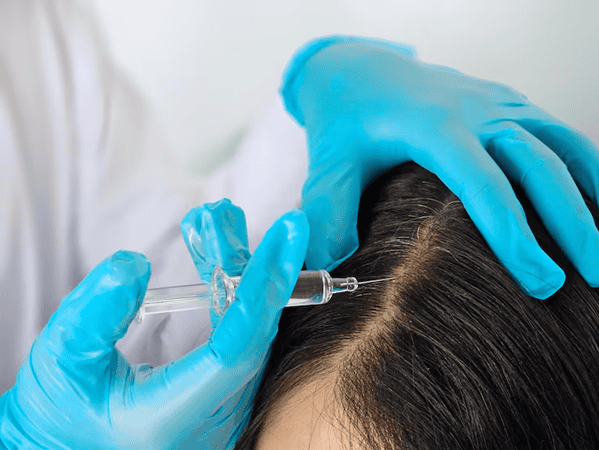
Most people who book in with a hair growth clinic have been sitting on the idea for a while. Months, sometimes years. It might be the hairline that keeps creeping back in photos, or the crown that suddenly shows up under harsh bathroom lighting.
If you’re looking for a DHI hair transplant clinic near you in Melbourne, you’ve probably got a few questions. How does it actually work? Does it hurt? How long before you see anything? This guide answers them the way we would in a consult, minus the sales pitch.
So, What Is DHI Exactly?
DHI stands for Direct Hair Implantation. It’s a refinement of FUE (more on that shortly), and the big difference is the tool. Instead of cutting a strip of scalp or pre-making hundreds of tiny incisions, the surgeon uses a single-use device called a DHI Implanter Pen. Picture a very fine, hollow-tipped pen that opens the skin and places the hair in one movement.
Here’s how it plays out. Follicles are removed one by one from the donor area, usually the back and sides of your head. Hair there is genetically resistant to the hormone behind pattern thinning, which is why it hangs around when the top doesn’t. Every graft is checked under a microscope. The healthy ones go into the pen, and that’s where the precision comes in. The surgeon controls:
- Depth: deep enough for the graft to pick up a blood supply, not so deep that it damages tissue.
- Angle: matched to the hairs around it, so nothing sticks straight up.
- Direction: hair on the crown swirls, while hair at the temples points forward. Each graft follows suit.
Get those wrong and a transplant looks like a transplant. Get them right and nobody can tell. With no pre-cut slits, there’s also less bleeding and less trauma to the scalp, which tends to help more grafts survive. That matters most at the front hairline, where every single hair is on show.
How to Choose a DHI Hair Transplant Clinic in Melbourne
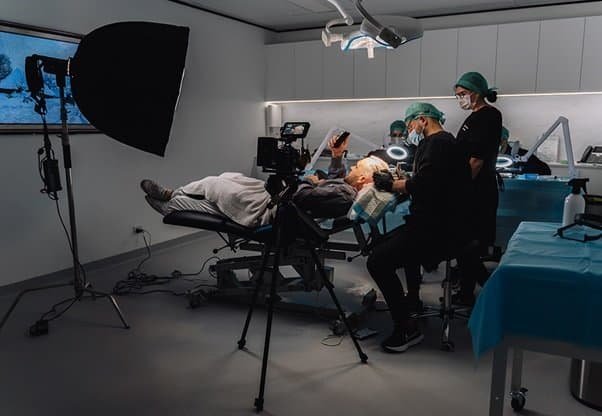
DHI is only as good as the hands holding the pen. Two clinics can use the exact same tool and get very different results, so it pays to choose carefully. When you’re comparing options for a DHI hair transplant in Melbourne, keep these points in mind:
- A doctor leads the procedure: a registered medical practitioner should design your hairline and oversee the implanting. You can check anyone on the AHPRA register in minutes.
- Real DHI experience: ask how often the surgeon uses an implanter pen. Doing plenty of FUE isn’t quite the same thing.
- Before-and-after photos like yours: look for patients with similar hair loss. Do the hairlines look soft, natural and right for their age?
- Diagnosis before surgery: a proper hair growth clinic checks for underlying causes first, such as hormones or common nutrient deficiencies like low iron.
- Honest advice, even when it’s a no: if your donor area is thin, they should tell you and talk through other options, including medication or scalp micropigmentation.
- Clear, written pricing: quotes are usually based on graft numbers. Be wary of anyone pushing you to sign on the day.
- Aftercare for the long haul: follow-ups should cover the full 12 to 18 months it takes to see your final result.
Bring a list of questions to your consult. If you walk out feeling rushed or sold to, that tells you plenty.
DHI vs FUE vs FUT: What’s the Difference?
You’ll hear about three main techniques, and it’s easy to get them muddled. FUT, or Follicular Unit Transplantation, is the oldest. A strip of skin is taken from the back of the head and divided into grafts. It works, but it leaves a linear scar that shows up the moment you ask your barber for a short back and sides.
FUE (Follicular Unit Extraction) got rid of the strip. Follicles are taken individually, leaving tiny dot scars instead. The catch is that the surgeon still has to cut all the recipient channels first, then place each graft with forceps. Two separate steps, with the grafts sitting outside the body in between.
DHI merges those two steps. The pen makes the opening and drops the graft in at the same time. Less time out of the body, less handling, less chance of a follicle drying out or getting squashed. Small things on their own. Together, they make a real difference to final density.
Patients also like that they often don’t need to shave their whole head. DHI can usually be done between existing hairs, so if you’d rather not announce your procedure at work, that helps. It isn’t right for everyone, though. Your doctor will look at your donor density, how flexible your scalp is and how far the thinning has gone before recommending it.
From Consult to Procedure Day
Your first appointment isn’t about surgery at all. It starts with a digital scalp analysis, a look at your medical history and an honest chat about what’s achievable. Some people come in hoping for the hairline they had at 18. Occasionally that’s on the cards. Often it isn’t, and you should hear that up front rather than after you’ve paid.
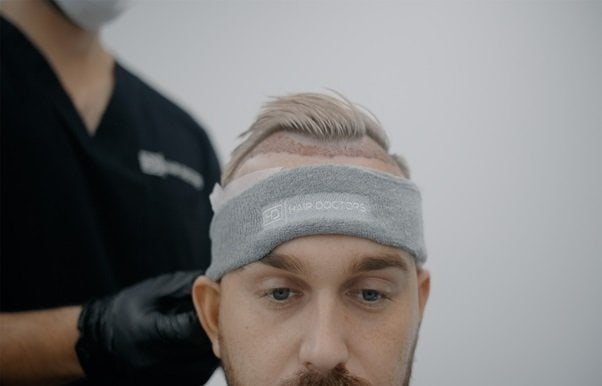
On the day, the donor and recipient areas are marked out and your new hairline is drawn on. You’ll see it in the mirror and get a say before anything begins. A good hairline suits your face and your age. It shouldn’t come from a template.
Phase 1: Local Anaesthesia and Extraction
Both areas are numbed with local anaesthetic. The injections sting for a minute or so, and that’s usually the worst of it. Extraction comes first. Follicles are taken one at a time with a micro-punch less than a millimetre wide, then kept in a chilled, nutrient-rich solution until they’re needed.
Phase 2: Precision Implantation
Then the implanting starts. Most sessions involve somewhere between 1,500 and 3,500 grafts, depending on how much ground there is to cover. It’s a long day, generally four to eight hours, so there are breaks for lunch, the loo and a stretch. Plenty of patients watch a movie or doze off. You’ll head home that evening. No overnight stay.
Recovery and When You’ll See Results
Recovery is usually easier than people expect. No stitches, no big wounds. You’ll go home with saline spray, mild anti-inflammatories and written washing instructions for the first week, which is when the grafts are at their most fragile.
Expect some swelling around the forehead and a bit of redness on the scalp for two or three days. Small scabs form around each graft and drop off within about 7 to 10 days. If you work at a desk, you could be back within three to five days. The gym, heavy lifting and anything that makes you sweat buckets? Give those two weeks. And if you smoke, now’s a good time to quit smoking or at least cut right back, because it slows healing and can affect how well your grafts take.
Now for the part nobody enjoys. Somewhere between two and six weeks in, most of the transplanted hairs fall out. It’s called shock loss, and it’s completely normal. The roots are still there, just resting. New growth usually starts around month three or four. By month eight, things look noticeably fuller, and the final result settles in at 12 to 18 months. It’s a wait, no question. Most patients will tell you it was worth it.
Recommendation
Doing something about hair loss is a personal decision, and it’s rarely only about looks. DHI is one of the most precise options out there. It’s gentle on the scalp, the downtime is short and, in the right hands, the results look like your own hair because they are your own hair. If you’re weighing up a DHI hair transplant in Melbourne, take your time, check out the practitioner properly and ask every question you’ve got. A good clinic will be glad you did.