
It is one thing to launch a profitable business in australia. You get your hands on some capital, get a good plan, and get started. However, growing your business is much more difficult than simply launching it. Thankfully, startup funding in Australia has never been more accessible. These days, founders can tap into venture capital, private investors, government funds, and even rely on alternative funding models. There is a clear market opportunity only if one knows the best possible ways to access it. Whether you are launching a consumer brand, creating a tech platform, or contributing to renewable energy Australia initiatives, this article can be your first step to understanding your funding options.

What Types of Startup Funding Are Available in Australia?
Australian startups have several funding pathways, each suited to different stages of business growth. If you have your own money to invest, that can be great; if not, you can seek other investors, and even rely on government or community support. It’s all about choosing the right one for yourself. Here’s a quick guide:
| Funding Type | Best For | Typical Amount | Pros | Cons |
| Bootstrapping | Early-stage founders validating an idea | Personal savings or business revenue | Full ownership, complete control | Limited growth capital and higher personal financial risk |
| Angel Investors | Businesses with early traction | $25,000–$500,000 | Mentorship, industry connections, flexible investment | Equity dilution and investor expectations |
| Venture Capital | High-growth startups with scalable business models | $500,000 to several million dollars | Significant funding, strategic guidance, and rapid expansion | Competitive, rigorous due diligence, loss of ownership stake |
| Government Grants | Innovation, research, export, manufacturing, and sustainability projects | Varies from a few thousand dollars to millions | Non-dilutive funding that doesn’t require giving up equity | Competitive application process and eligibility requirements |
| Crowdfunding | Consumer products and businesses with engaged communities | $10,000–$500,000+ | Validates market demand while raising capital | Success depends heavily on marketing and campaign execution |
However, one important point to note is that these startup funding pathways are not mutually exclusive, so you can combine multiple sources throughout your journey as needed. For instance, you might leverage grant funding for startups alongside initial bootstrapping to secure an angel investor in the early stages, then raise venture capital later to scale up.
How Do I Prepare My Startup Before Seeking Funding?
Do not get overexcited about an investment without a proper setup. Remember, investors rarely fund an idea alone. Before anyone invests in a business or provides critical funding for startups, they assess whether your idea has a market, how prepared you are, and your growth potential. They only invest if they see a strong foundation. Here’s the checklist you should follow for Australian startups preparation:
- Create a compelling pitch deck: first off, every business has a purpose. With the pitch deck, you need to explain the problem that your business is solving. You also need to clearly show in the pitch deck what your solution is, your business model, your competitive advantage, and your funding requirement. It’ll be great if you introduce your team in the pitch deck as well.
- Build realistic financial projections: As we mentioned earlier, investors want to understand your potential for growth; to do so, they need to know, in practical terms, how you plan to generate revenue and how much. At the same time, you also need to be clear about managing costs and achieving profits. A forecast of 2-3 years, backed by reasonable evidence, is ideal.
- Demonstrate traction: Evidence is important. Your evidence can include your paying customers, user growth, pilot programs (if any), recurring revenue, and partnerships. What that does is show whether your business genuinely solves a market need. This way, investors also understand how their funding will be used. Hence, be prepared to discuss customer acquisition costs, projected lifetime value, market size, cash runway, and expected return on investment.
Where Can I Find Startup Funding in Australia?
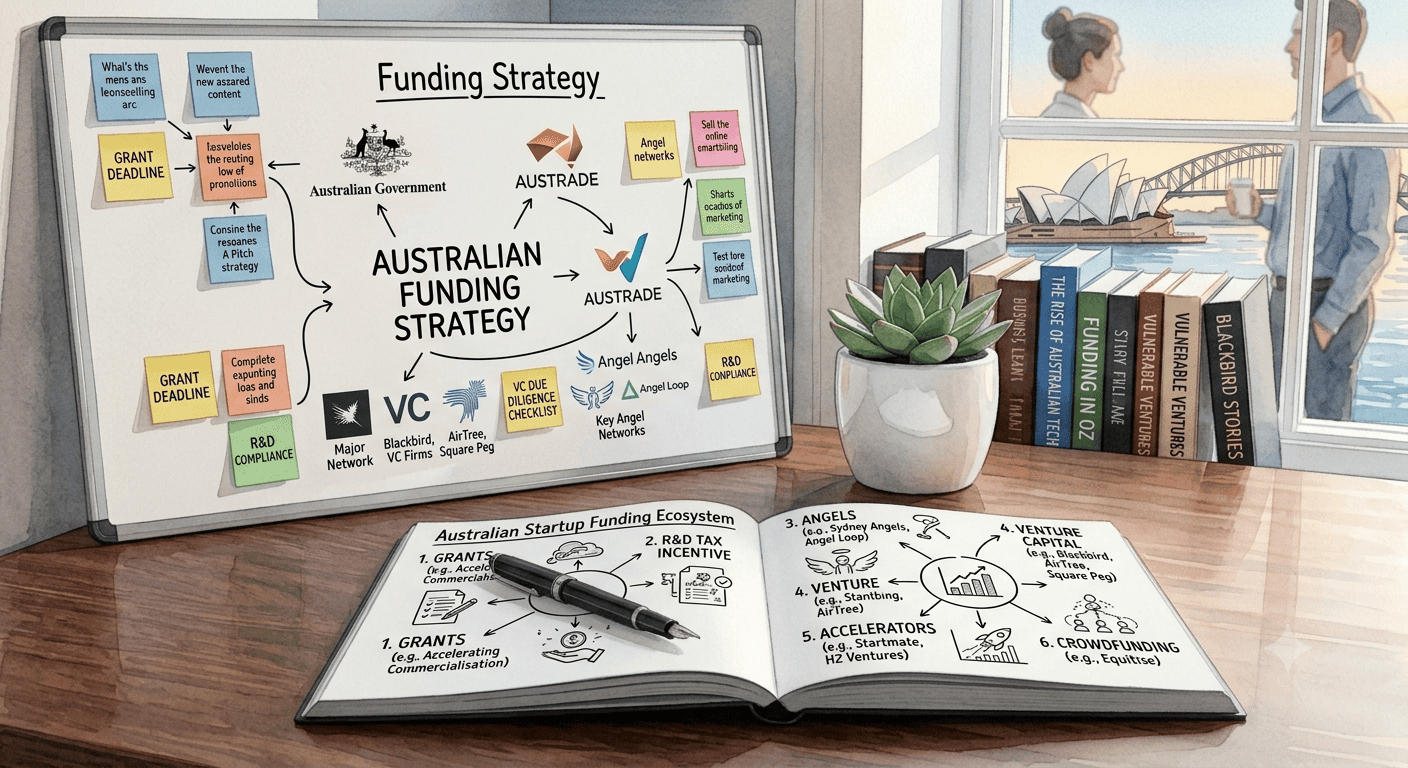
Australia has a mature startup ecosystem supported by venture capital firms, government agencies, accelerators, and innovation hubs. Knowing where to look can significantly improve your chances of securing funding.
Some of Australia’s best-known venture capital firms include Blackbird Ventures, Square Peg Capital, AirTree Ventures, and Main Sequence Ventures, all of which actively invest in scalable Australian startups across technology, healthcare, fintech, climate technology, and emerging industries.
Government support also plays a major role. Austrade helps high-growth Australian businesses expand internationally, while business.gov.au provides a central directory of grants, funding programs, and business support services. Founders developing innovative products may also benefit from the Research and Development (R&D) Tax Incentive, which rewards eligible companies investing in research and innovation.
Location can also influence funding opportunities. Sydney remains Australia’s largest venture capital hub, attracting substantial investment across fintech, enterprise software, and artificial intelligence. Melbourne continues to build momentum through its thriving startup community, universities, and innovation precincts, particularly in biotechnology, health technology, and advanced manufacturing.
How Do I Improve My Chances of Getting Funded?
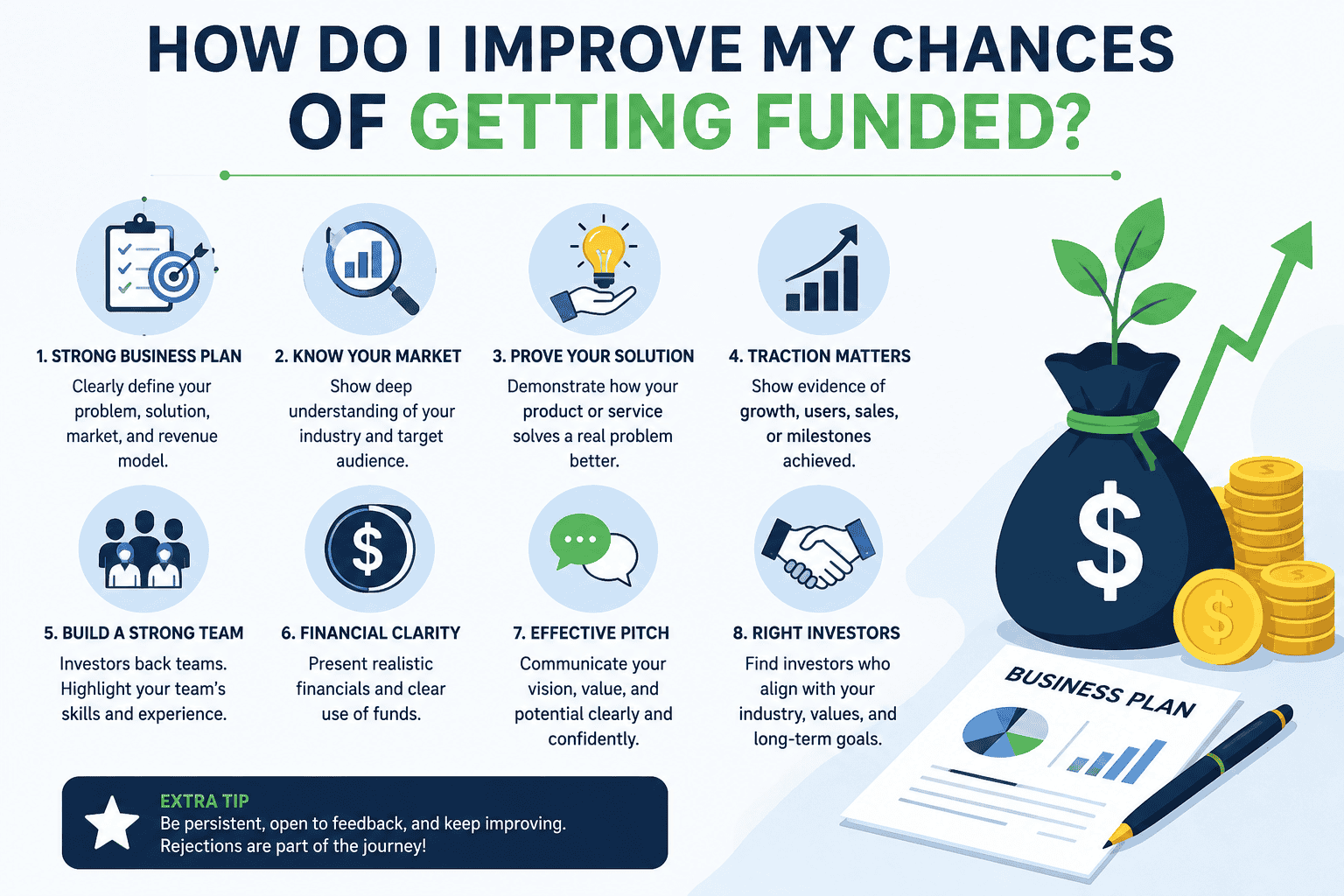
As we already discussed, a great idea alone cannot secure your funding. But here are some things you can do to improve your chances:
- Solve a genuine problem that actually addresses customers’ pain points.
- Validate your market through customer feedback and by building a minimum viable product (MVP)
- Built the right team with the right people who have complementary skills.
- Be realistic about your valuation.
- Network constantly and consistently to connect with mentors and investors.
- Tailor every application and proposal to match the priorities of your funders.
What Grants Are Available for Startups in Australia?
In all your efforts, the Australian government have reliable support system and can offer grants with valuable non-dilutive funding. This is amazing because you won’t have to give up any equity in your business. Here are some grants to look out for:
| Grant or Program | Purpose | Who It’s Best For |
| Research and Development (R&D) Tax Incentive | Tax offset for eligible research and development activities | Innovative startups investing in product or technology development |
| Industry Growth Program | Advice and funding for innovative small and medium businesses | High-growth Australian startups with commercial potential |
| Export Market Development Grants (EMDG) | Helps businesses expand into international markets | Export-ready startups seeking overseas growth |
| State Government Innovation Grants | Funding varies by state and territory for innovation and commercialisation | Early-stage businesses operating within specific states |
| CSIRO Kick-Start Program | Supports research collaboration with CSIRO experts | Startups developing science and technology-based products |
There is no one-size-fits-all approach to startup funding in Australia. The right funding strategy really depends on your stage of growth, industry, and long-term goals. With strong preparation, a compelling business case, and a clear understanding of the funding landscape, Australian startups are well placed to secure the capital they need to scale.
Frequently Asked Questions:
How much funding can a startup get in Australia?
It depends on the funding source as well as the stage of business. Usually an Angels investor may raise around & 25,000 but venture capitals can raise much more.
Do I need a company registered in Australia to apply for grants?
Yes, most government programs need applicants to have an Australian Business Number (ABN). However, requirements may differ so it’s best to do a thorough check before applying.
What is the easiest way to fund a startup in Australia?
The simplest way is bootstrapping as it often depends on your personal savings, but it can only work as early business revenue until you have gained more traction and then you can move on to other measures.
Are there tax incentives for startup investors in Australia?
Yes. Australia offers several tax incentives that encourage innovation and investment. Eligible businesses may benefit from the Research and Development (R&D) Tax Incentive.