
In 2026, the Australian business landscape is no longer just “going digital”—it is becoming “intelligence-first.” For a country defined by vast distances and a high-cost labor market, the shift from traditional e-commerce to AI-driven transformation isn’t just a tech upgrade; it’s a survival strategy.
For Australian small businesses and startups, this transition is particularly personal. It’s moving away from the “hustle” of manual spreadsheets and towards a world where human creativity is amplified by machine precision.
The Sunset of the Search Bar: How Australians Shop Now
In 2024, if a Melburnian wanted a new pair of hiking boots, they’d type “best hiking boots Australia” into Google and scroll through ads. In 2026, that journey has been replaced by Conversational Search.
Today’s Australian consumer is likely using an AI shopping agent on their phone to ask: “I’m doing the Overland Track in Tasmania next month. Find me waterproof boots that fit a wide foot, are currently in stock in Sydney, and can be delivered by Friday.”
For an e-commerce business in Australia, this means traditional SEO is dying. Brands are now optimizing for “Generative Engines”—ensuring their product data is so clean and “readable” that AI assistants can find, trust, and recommend them in seconds.
Business Automation: The “Hidden Employee” for SMEs
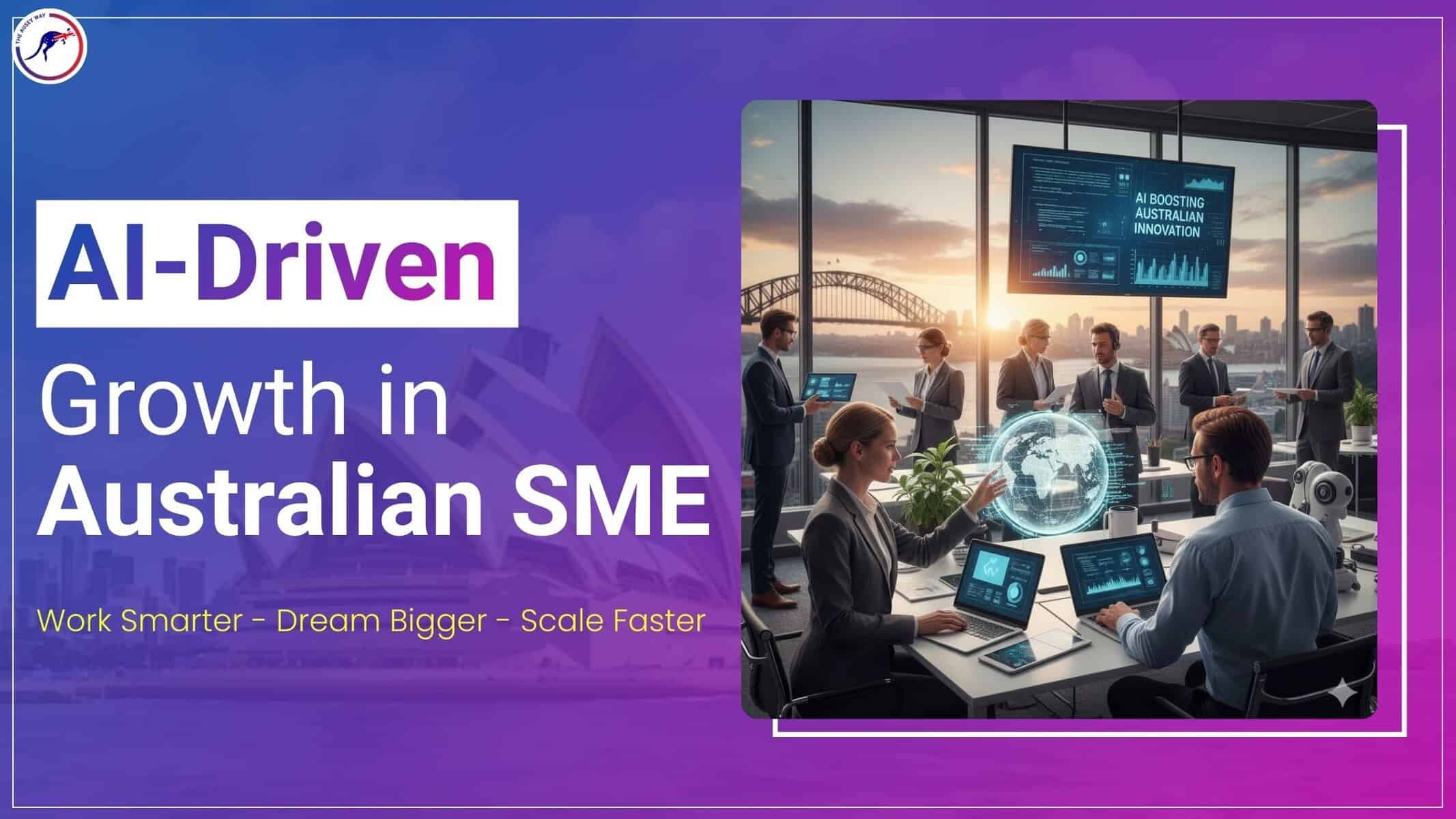
The “Great Resignation” and subsequent labor shortages hit Australian SMEs hard. In response, business automation has transitioned from a luxury for big retailers like Wesfarmers to a baseline requirement for the local boutique.
Recent data shows that nearly 60% of Australian SMEs have integrated AI into their day-to-day operations this year. It’s not about replacing people; it’s about “scaling without hiring.”
- The AI Bookkeeper: Automated systems now handle 80% of invoice reconciliation and GST compliance.
- The Predictive Stockist: Instead of guessing how many “cozy knits” to order for a Canberra winter, AI analyzes hyper-local weather patterns and social trends to predict inventory needs with 90% accuracy.
- The 24/7 Concierge: Australian startups are using “Agentic AI” that doesn’t just answer FAQs but can actually process returns and change shipping addresses autonomously at 3:00 AM on a Sunday.
Startups: The New “Agent Orchestrators”
The most successful Australian startups in 2026 aren’t just building apps; they are building “Agent Ecosystems.” We are seeing a shift in the workforce where founders are no longer “managers” but “orchestrators.”
A typical tech startup in Surry Hills or Cremorne might now operate with a lean team of five humans managing a fleet of twenty AI agents. These agents handle everything from code generation and fraud detection to personalized marketing copy for different Australian demographics—adjusting tone for a surf-brand customer in Noosa versus a corporate professional in Perth.
Keeping it Human: The Counter-Trend
Despite the rapid automation, 2026 has brought a surprising realization: The more we automate, the more we value the “Human Touch.”
As AI takes over the “arduous, laborious, and menial” tasks—as a recent Deloitte report highlighted—Australian business owners are finding more time for what they actually love:
- Relationship Building: Spending time on the phone with a long-term supplier or meeting a client for coffee.
- Creative Vision: Designing the next product line rather than debugging a website.
- Community Impact: Focusing on local sustainability initiatives that AI can’t authentically champion.
In the Australian market, “Human-Centric AI” is the gold standard. Customers can tell when they are talking to a bot, but they don’t mind—as long as that bot is efficient and allows the real humans behind the brand to be present when it matters most.
The Data Sovereignty Challenge
With the 2026 updates to the Australian Privacy Act, trust has become the new currency. Small businesses are shifting toward “Sovereign Edge” computing—keeping customer data on local AU servers and using “Privacy-Preserving Analytics.”
Australians are willing to share their data for a personalized experience, but they are increasingly wary. The businesses winning in 2026 are those that are transparent about their “AI Guardrails,” ensuring that while the shopping experience is futuristic, the privacy is old-school and airtight.
Conclusion: Australia’s Intelligence Dividend
The shift from e-commerce to AI-driven commerce is expected to add nearly $50 billion to the Australian economy by the end of this decade. But for the local shop owner or the Sydney-based startup founder, the “dividend” is more than just dollars—it’s time.
We have reached a point where technology finally does the heavy lifting, allowing the “Aussie spirit” of innovation and community to take center stage. The “Market Shift” is complete: we aren’t just selling online anymore; we are building intelligent, responsive, and deeply human ecosystems.