

A child’s development requires social skills, which remain one of the most important tools. Children who develop sharing abilities along with cooperation skills and emotional expression, and conflict resolution competencies at an early age, become better equipped for constructing healthy emotional bonds. While parents and teachers play a critical role in nurturing these skills, one often-overlooked setting for growth is the playground.
Other than parental and academic guidance, these skills find their best growth environment at the playground. A carefully designed playground represents more than a physical fitness space because it creates an effective foundation for human interaction and creative expression, and social communication. In fact, playground design for social skills has become a growing area of focus for educators, parents, and community planners who recognise the vital role of outdoor play in child development. The thoughtful design of playgrounds with inclusivity as a priority enhances the benefits for neurodivergent children among other groups of children.
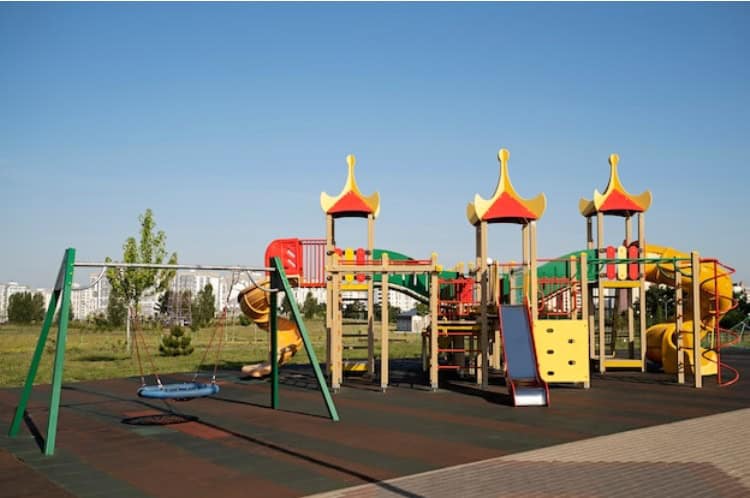
The Link Between Play and Social Development
Children use play as their natural method to discover social skills in a joyful learning process. The environment provides children with a protected space to discover social roles while expressing their requirements and understanding other people’s actions. Children develop important social abilities through activities such as role play and team climbing and shared games like tag and hide-and-seek.
For example, children who pretend to be shopkeepers while their friends act as customers develop essential social skills through this play activity. The experience teaches them how to start conversations and negotiate while adopting different roles. These types of experiences are fundamental to social development in children, helping to prepare them for more complex social interactions as they grow.
Outdoor environments create additional depth to these social interactions. The adventure-style playground design allows children to engage in spontaneous group activities which differ from the structured environment of indoor classrooms. In these settings, children can explore, test boundaries, and interact without rigid rules—this is where adventure playground social interaction thrives, offering unstructured yet meaningful lessons in human connection.
Key Playground Design Features That Foster Social Interaction
The physical design of playgrounds directly affects the social interactions between children. The playground design includes specific features that promote teamwork between children. The multi-user playground equipment, including seesaws and group swings and merry-go-rounds enables children to share active playtime together. The equipment features require natural communication and teamwork which leads to constructive social interactions between children.
- The open-ended elements of water tables and sandboxes, and musical panels enable children to express creativity while creating opportunities for others to participate. The tools excel at developing group storytelling activities while supporting cooperative building projects and problem-solving efforts.
- The imaginative play zones featuring castles and pirate ships, and market stalls establish thematic areas where children can create joint stories. The collective stories children create serve as excellent opportunities for friendship development and social role understanding.
- The physical elements of obstacle courses and climbing nets enable children to move together while interacting with each other. The equipment encourages children to support each other through cheering and taking turns and physical help.
Equally important is visibility. The ability to see everything from any point in the space remains crucial because it enables parents and teachers to monitor activities and step in when needed while promoting inclusive play. The ability to observe and intervene in group settings becomes essential when working with children who require extra guidance to navigate social situations.
Considering Children with Autism and Developmental Differences
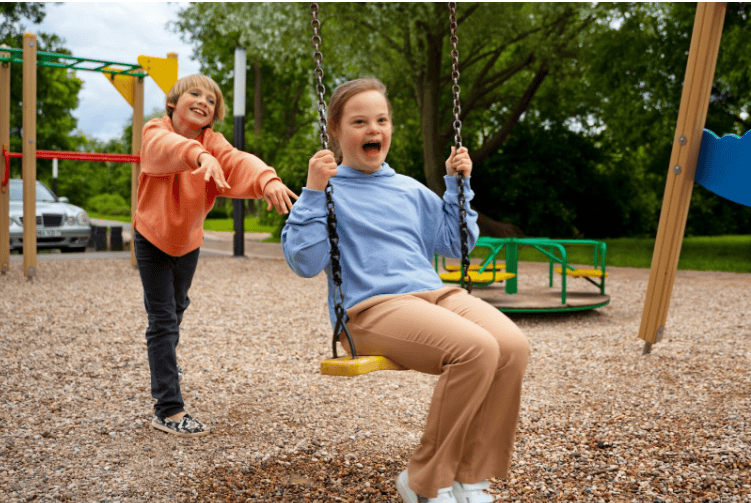
For neurotypical children, a noisy, vibrant playground may be energising. But for a child with autism, it can sometimes be overwhelming. Sensory overload, communication differences, and social anxiety may make playground experiences feel stressful rather than joyful.
That’s why sensory-friendly playground design is crucial. This includes quiet areas for retreat, tactile pathways with varied textures, visually calming colours, and spaces with low auditory stimulation. These features help regulate sensory input and give children the tools they need to engage on their own terms.
Inclusive design does not mean separating autistic children from others; it means removing barriers to their participation. Even children with developmental challenges can flourish socially when the environment supports them. For instance, structured activities within playgrounds help autistic children practice routines, model expressions, and learn social norms in a real-world context. This reinforces the value of outdoor play for autistic children, as it combines sensory exploration with the chance to build vital interpersonal skills.
Role of Autism Support Workers in Outdoor Play
In the effort to make play accessible and enriching for every child, people play just as critical a role as places. An autism support worker is a trained professional who assists children on the spectrum in various settings, including during outdoor play. Their work often blends elements of psychology, education, sports, and social work, equipping them with a broad set of tools to connect with and support autistic children.
The role of autism support workers on the playground is multifaceted. They observe play patterns, guide social interactions, and help children make and keep friends. They may also facilitate games, model positive behaviour, or assist with transitions between activities. Their presence provides a comforting anchor for children who may otherwise feel lost or overwhelmed.
By using strategies such as sports or play therapy, these professionals gently encourage peer engagement and help children experience the joy of shared play. This not only aids in social development but also boosts confidence and emotional security—two pillars of healthy childhood growth.
Encouraging Inclusive Play for All
Creating truly inclusive playgrounds requires more than thoughtful equipment—it demands a community-wide commitment. Inclusive play means that every child, regardless of their physical, cognitive, or emotional abilities, can participate fully and joyfully. That’s where the combination of intentional design and professional support makes the greatest difference.
The presence of features like inclusive playground equipment, which might include wheelchair-accessible swings, sensory panels, and easy-to-navigate surfaces, ensures that children with a variety of needs are not left out. But it’s the human connection, often provided by caregivers and trained professionals, that turns access into engagement.
Communities that prioritise training for teachers, staff, and volunteers see stronger results. When playgrounds are paired with awareness programs and school partnerships, children learn to see each other not through the lens of difference, but through the shared joy of play. In these environments, inclusive play becomes the norm, not the exception.
Playgrounds as Pathways to Connection and Growth
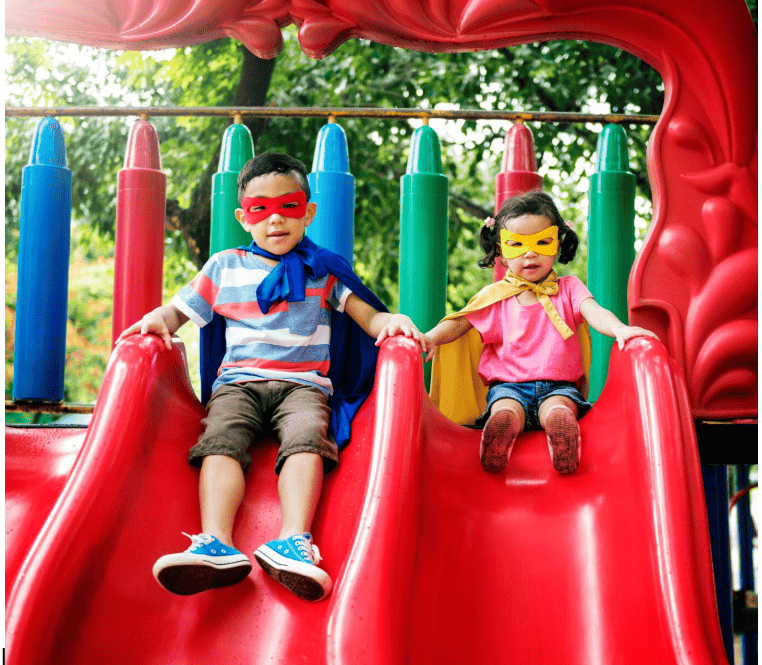
Playgrounds are far more than recreational spaces—they are essential social laboratories where children develop the skills that will guide them through life. The right design supports this development by encouraging interaction, imagination, and inclusion. When we combine thoughtful planning with compassionate human support, we unlock the full potential of every child.
Whether it’s a neurotypical child learning how to share, or an autistic child finding their voice through play, the playground remains a vital setting for emotional and relational growth. By recognising the importance of child development through play, we can ensure that our parks, schools, and community spaces serve all children equally and meaningfully.
It is time for schools, designers, and communities to embrace a vision of play that welcomes everyone. From autism-friendly playgrounds to dynamic group spaces that promote engagement, the blueprint for inclusive, socially enriching playgrounds is clear—and incredibly worth the investment.
Also Read :
How To Help A Child With Autism Build Social Relationships
Wellness Retreats Near Brisbane Can Revitalise Your Mind